
Why Policy Language Trips People Up
Insurance policies are legal contracts, and legal contracts use words with surgical precision. A term that sounds straightforward in everyday conversation — "accident," "damage," "loss" — can carry a narrow, specific meaning inside a policy that surprises policyholders at the worst possible moment: when a claim is denied.
This isn't accidental. Policy language is drafted to define exactly what is and isn't covered, and those definitions live in a section most readers skip. Reading an insurance policy for the first time can feel overwhelming, but understanding even a handful of key terms dramatically reduces the risk of misreading your coverage.
The mistakes below represent the most common language misreadings that lead to denied claims — across home, auto, and health insurance alike.
Assuming 'all-risk' means every possible risk is covered.
Why it happens: The phrase 'all-risk' (also called 'open perils') sounds comprehensive, so policyholders assume nothing is excluded. In reality, all-risk policies still contain a list of named exclusions — floods, earthquakes, and intentional acts are common ones.
Confusing 'actual cash value' with 'replacement cost.'
Why it happens: People expect to be paid what it costs to replace a damaged item today. 'Actual cash value' (ACV), however, means replacement cost minus depreciation — so a five-year-old roof or appliance pays out significantly less than its current replacement price.
Treating 'sudden and accidental' as covering any unintended damage.
Why it happens: If a pipe bursts and floods a room, it feels sudden and accidental. But insurers often interpret 'sudden and accidental' to exclude damage that resulted from a slow, ongoing condition — like a slow leak that eventually caused mold — even if the homeowner didn't notice it.
Believing 'medical payments' coverage pays all medical bills after an incident.
Why it happens: Medical payments (MedPay) coverage sounds like a health insurance substitute. Policyholders sometimes assume it will cover all injury-related costs, when in fact it has a specified limit — often $1,000 to $5,000 — that may cover only a fraction of actual medical expenses.
Assuming 'negligence' is covered because the incident was an accident.
Why it happens: People conflate accidental with covered. But some policies exclude claims arising from the policyholder's own negligence in specific circumstances, and others define the coverage trigger in ways that leave gaps. This is especially common in liability sections.
Misunderstanding 'named insured' to include all family members or household residents automatically.
Why it happens: The policyholder assumes everyone under their roof is covered because they took out the policy for the household. But 'named insured' refers specifically to the person or persons listed on the declarations page, and coverage for others may depend on how 'household member' or 'resident relative' is defined in that specific policy.
Terms Most Likely to Mislead You
Beyond the individual mistakes above, a few categories of language deserve extra scrutiny before you assume you're covered.
1 in 7
Homeowners claims that are denied or underpaid
Industry estimates from the United Policyholders consumer advocacy organization suggest a meaningful share of property claims result in disputes over policy language and coverage scope.
~40%
Of policyholders who have read their full policy
Surveys conducted by the Insurance Information Institute have found that a large portion of insurance customers do not read their policy documents in full before a loss occurs.
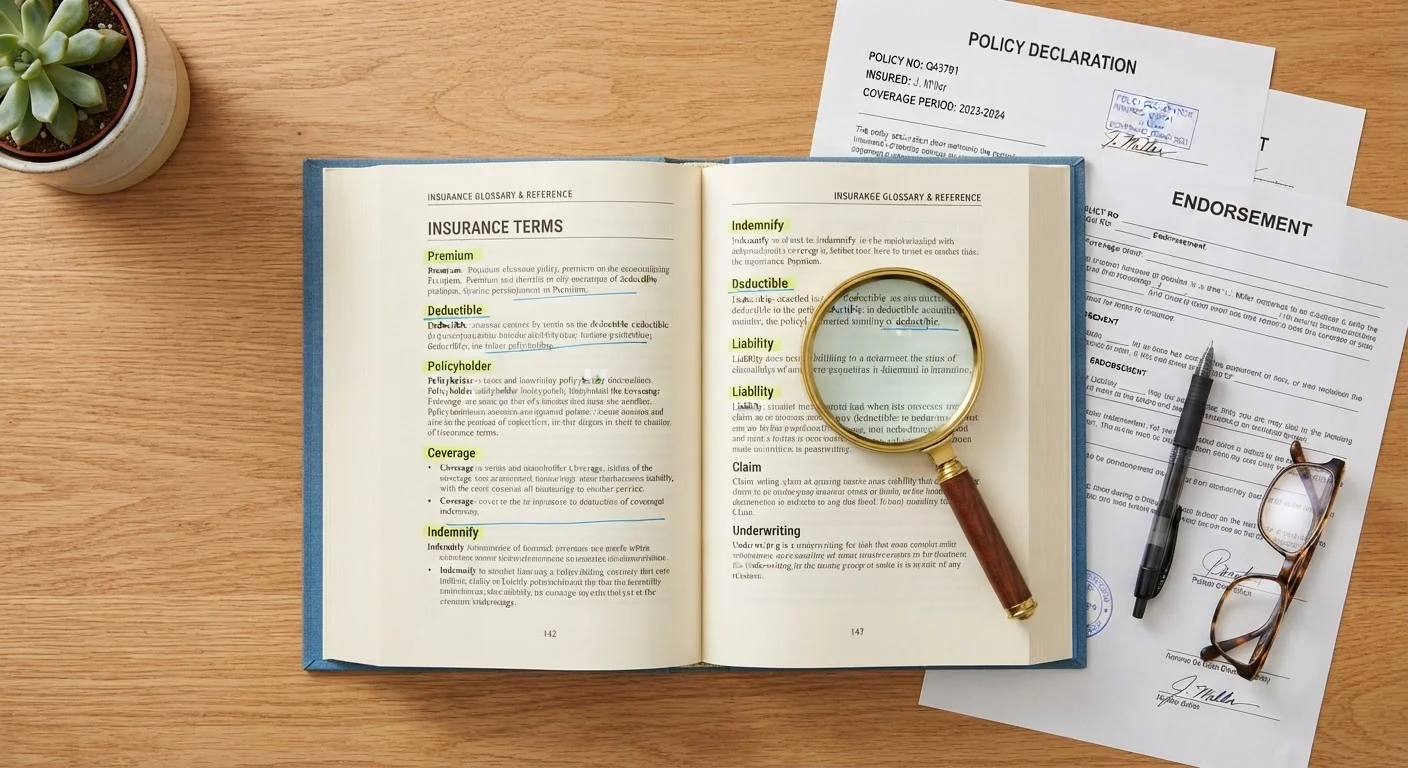
Definitions sections matter more than most people realize. Every policy contains a definitions page that assigns precise meanings to bolded or quoted terms throughout the document. If your policy capitalizes "Occurrence" or puts "Bodily Injury" in quotes, those words carry the definition from that page — not their dictionary meaning. Understanding the difference between occurrence and claims-made policies is one example of how a single term can determine whether a claim is covered at all.
Exclusions are where coverage quietly disappears. Exclusions are listed separately from coverage grants, and they can override language that looks like it covers your situation. Exclusions are the part of your policy most people skip over — and discovering one after a loss is filed is far more costly than reading ahead.
Don't Rely on the Summary Page Alone
Your policy's declarations page and coverage summary are useful overviews, but they do not contain the definitions, conditions, and exclusions that govern claim decisions. Insurers apply the full policy document — not the summary — when evaluating a claim. Make a habit of reading the complete policy, particularly the definitions and exclusions sections, before you ever need to file.
If you've already received a denial and believe it stems from a language dispute, review our guide on why insurance claims get denied and what you can do next. A denial is not always final, and understanding the specific language at issue can support an appeal.
This article is for general informational and educational purposes only and does not constitute insurance, legal, or financial advice. Coverage terms, exclusions, and claim outcomes vary by policy and provider. Always read your actual policy documents and consult a licensed insurance professional for guidance specific to your situation.