
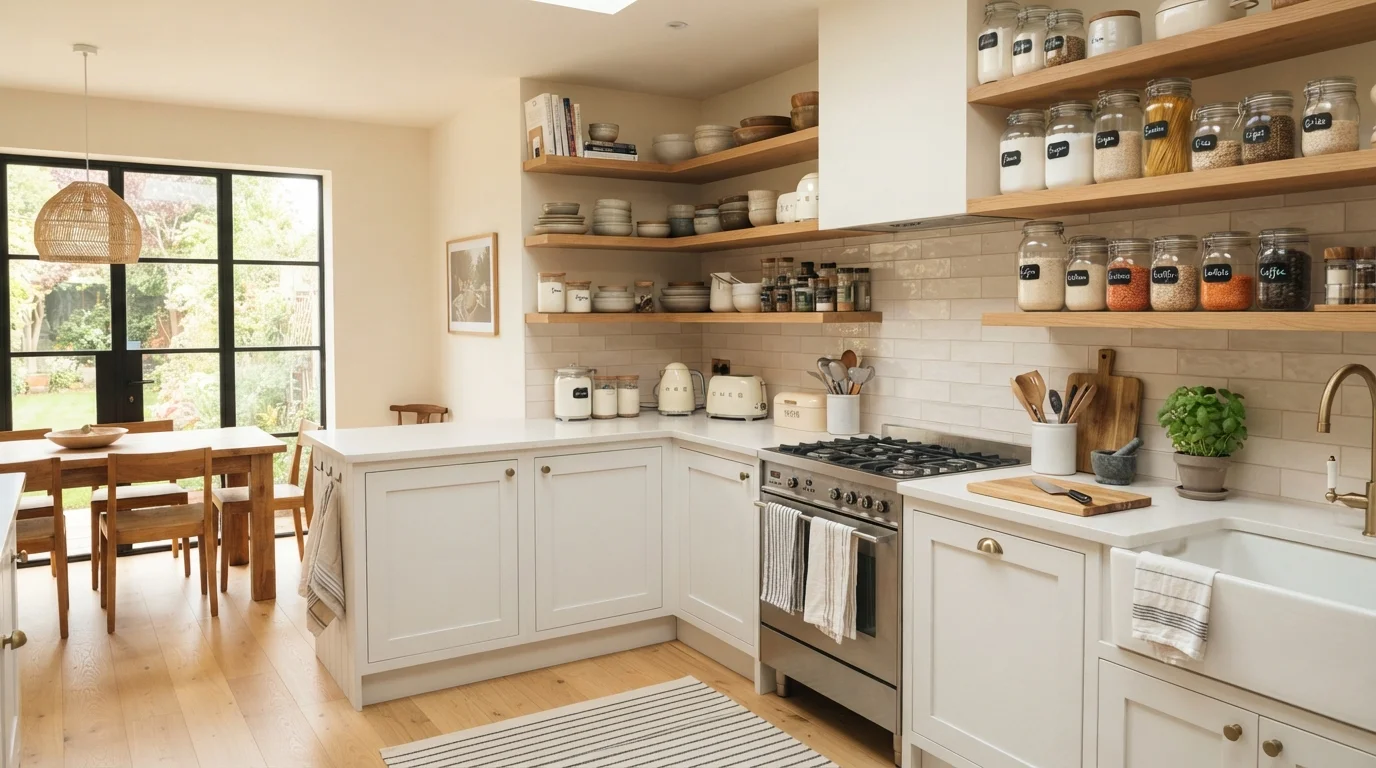
Start with the Work Triangle - Then Adapt It
The classic kitchen work triangle - connecting the refrigerator, sink, and stove - remains a reliable starting point for functional layout. The goal is minimizing unnecessary steps during food prep and cooking. If your kitchen's footprint doesn't allow a true triangle, prioritize clear, unobstructed paths between these three zones instead.
Once your core zones are mapped, assign everything else around them. Prep tools belong near the prep zone. Cooking utensils and oils live beside the stove. Dish storage makes most sense near the dishwasher or drying rack. When items live close to where they're actually used, your kitchen stays naturally organized rather than depending on daily effort to maintain order.
If you're also thinking through a sustainable weekly meal plan, an efficient kitchen layout directly reduces the friction that makes home cooking feel like a chore.
Choose Storage That Holds Up Over Years
Storage quality is one of the most consequential decisions in kitchen setup, yet it's easy to underestimate. Flimsy shelf organizers, thin plastic bins, and low-gauge wire racks tend to warp, break, or lose structural integrity within a year or two of daily use. As detailed in our guide on why cheap storage solutions end up costing more, replacement cycles add up fast - both in cost and inconvenience.
When evaluating kitchen storage, look for:
- Material durability: Stainless steel, solid wood, and heavy-gauge plastics consistently outlast lighter alternatives in humid, high-use environments.
- Adjustability: Shelves and organizers that can be reconfigured let your storage adapt as your household needs change.
- Moisture resistance: Kitchens generate steam and spills. Sealed or coated surfaces are far easier to clean and less prone to degradation.
Audit Before You Organize
Adding more storage bins or organizers to a cluttered kitchen often makes the problem worse, not better. Start by removing everything from one cabinet or drawer at a time and only returning what you genuinely use. This single step frequently reveals that the real issue is excess items, not insufficient storage - and it costs nothing.
Before buying additional storage, do a full audit of what's currently in your cabinets. Clearing items you no longer use - see our room-by-room decluttering framework for a structured approach - often reveals more usable space than adding new containers would.
Appliance Placement and Maintenance Habits
Where you position appliances matters for both daily usability and long-term safety. Countertop appliances used daily - coffee makers, toasters, kettles - should be accessible without moving other items. Appliances used occasionally belong in lower cabinets or pantry space, not permanently occupying valuable counter real estate.
For larger built-in appliances, ensure adequate clearance for ventilation. Refrigerators need airflow around the condenser coils; ranges need proper exhaust ventilation above them. These aren't just performance considerations - blocked airflow can reduce appliance lifespan and, in the case of gas ranges, create safety risks. For any work involving gas line connections or electrical installations, always consult a licensed professional.
Kitchen Maintenance Is Ongoing, Not One-Time
Setting up an efficient kitchen is a starting point, not a finish line. Surfaces, appliances, and organizational systems all require periodic attention to stay functional. Treating the kitchen as part of your regular home maintenance routine - rather than something to revisit only when problems arise - is the most practical approach to long-term functionality.
Incorporate kitchen appliances and surfaces into your broader home maintenance rhythm. Our seasonal home maintenance checklist includes kitchen-specific tasks - like cleaning refrigerator coils and inspecting exhaust fan filters - that are easy to overlook but meaningfully extend equipment life.
Assign a fixed home to every item in your kitchen before putting it away the first time.
When every item has a designated location, the kitchen resets naturally after use rather than requiring periodic reorganization. It also reduces the time spent searching for tools mid-cook, which makes the space genuinely more efficient.
Use uniform, stackable containers for pantry and refrigerator storage.
Uniformity allows you to use vertical space fully and makes inventory visible at a glance. Mixed container shapes create dead space and make it harder to see what's available, leading to duplicate purchases and food waste.
Keep countertops clear of everything except what you use daily.
Counter space is your primary work surface. Appliances or items sitting permanently on counters reduce the usable prep area and make cleaning harder, which allows grease and bacteria to accumulate in hard-to-reach spots.
Label shelves and zones, not just individual containers.
Zone labels communicate the system to everyone in the household, not just the person who set it up. This is especially useful in shared households where different people put groceries away, reducing the gradual drift that causes storage systems to break down.
Schedule a short monthly kitchen reset rather than waiting for things to become disorganized.
Small amounts of disorder accumulate quickly in high-use spaces. A 15-20 minute monthly session to clear expired items, wipe down shelf liners, and return misplaced items prevents the kind of buildup that requires a full-day overhaul to fix.
Sustaining Functionality Over Time
A kitchen's long-term functionality depends less on a perfect initial setup and more on habits that prevent gradual deterioration. Grease buildup on exhaust filters reduces their effectiveness. Overcrowded cabinets lead to breakage and make it harder to find what you need. Neglected spills stain or damage surfaces over time.
Building a few consistent habits - wiping down surfaces after cooking, returning items to their designated spots, running a monthly check of what's expired in the pantry - creates compounding returns. These small actions preserve both the physical condition of your kitchen and its usability as a workspace.
If your household is working toward eating more meals at home, a functional kitchen is genuinely foundational. The easier cooking is, the more consistently it happens. See our guide on building a balanced plate for a practical framework that pairs well with a well-organized kitchen.