
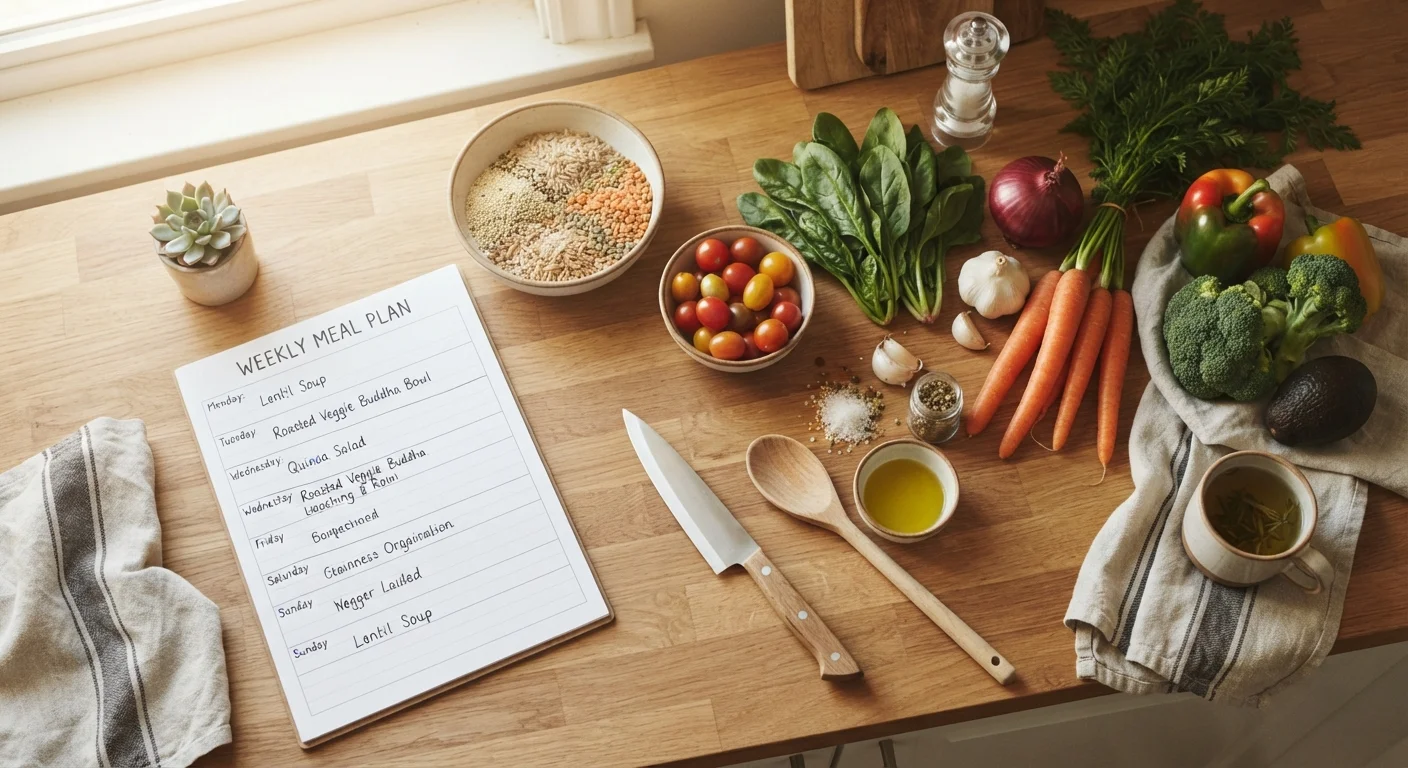
Why Most Meal Plans Fail - and What to Do Instead
The most common reason meal planning breaks down isn't lack of willpower - it's that the plan was never realistic to begin with. Overly detailed menus, unfamiliar recipes stacked back-to-back, and no allowance for the unexpected all but guarantee that the system collapses by Thursday.
A sustainable approach treats the weekly plan as a loose structure rather than a contract. The goal is reducing daily decision fatigue, minimizing food waste, and making nutritious choices the path of least resistance - not achieving a perfect adherence rate.
Research consistently supports that environmental design (having the right foods accessible and prepped) does more to shape eating behavior than motivation alone. Meal planning is fundamentally a form of environmental design. Done well, it pairs naturally with building a consistent weekly exercise routine to support your overall wellness goals.
This Is General Guidance, Not Medical Advice
The strategies in this article are intended for general informational purposes only. They are not a substitute for personalized nutrition advice from a registered dietitian or healthcare provider. If you have a medical condition, food allergy, or specific dietary need, consult a qualified professional before making significant changes to your eating habits.
Before diving into the steps, gather the tools and starting conditions that make planning easier.
What you will need
Weekly planner notepad or whiteboard
Maps out which meals you'll cook on which days, making the plan visible and easy to adjust.
Reusable grocery list (paper or app)
Keeps your shopping consistent and reduces impulse buys or forgotten staples.
Airtight food storage containers
Store batch-prepped ingredients and leftovers safely so they stay fresh through the week.
A slow cooker or sheet pan
Enables low-effort batch cooking of proteins, grains, and roasted vegetables simultaneously.
Step-by-Step: Building Your Weekly Meal Plan
Follow these five steps once a week - ideally on the same day each week to build the habit. Most people find Sunday or Saturday morning works well, but choose whatever fits your rhythm.
Audit your actual week before writing a single meal
Pull up your calendar before touching a recipe. Note evenings with late meetings, nights you're eating out, or days when you genuinely won't have time to cook. A plan built around your real schedule - not an idealized one - is the only kind that survives contact with actual life.
Aim to identify two or three nights where cooking is realistic, and flag one night as a planned leftover or easy-assembly meal (grain bowls, wraps, eggs).
Choose a flexible meal framework, not a rigid recipe list
Rather than locking in specific recipes for every slot, assign meal categories to each cooking night - for example: a sheet-pan protein with roasted vegetables on Monday, a grain-based bowl on Wednesday, and a bean or lentil dish on Friday. This approach keeps variety without demanding that you follow a precise recipe every time.
For guidance on what a nutritionally sound meal looks like, see our guide to building a balanced plate.
Build your grocery list from the plan - not your memory
Walk through each planned meal and write down every ingredient you'll need. Then cross-reference your pantry and fridge to remove duplicates. A plan-derived list prevents both overbuying and the mid-week discovery that you're missing a key ingredient.
Keep a standing section of your list for staples (olive oil, canned beans, grains, frozen vegetables) that you replenish automatically. Our smarter grocery shopping checklist walks through what to look for at each section of the store.
Do a short batch-prep session - focus on ingredients, not full meals
Set aside 30-45 minutes after your main grocery shop to prep a few foundational ingredients: cook a batch of grains (rice, farro, quinoa), roast a tray of vegetables, and portion out raw proteins. These building blocks assemble quickly into different meals throughout the week without locking you into one dish.
Batch-cooking entire meals in advance works for some people but can feel monotonous by day three. Ingredient-level prep preserves more variety and flexibility.
Review and adjust the plan at midweek
Spend five minutes on Wednesday or Thursday checking whether the remaining plan still fits reality. Did you eat out unexpectedly? Do you have more leftovers than anticipated? Shift, swap, or simplify as needed rather than abandoning the plan entirely when it drifts.
A brief midweek check is what separates a plan that lasts from one that collapses after the first disruption. Over time, this habit supports the kind of consistent nutrition habits that actually stick.
Start Smaller Than You Think You Need To
First-time meal planners often overcommit and burn out by week two. Planning just three to four dinners - and leaving room for leftovers, takeout, or flexible nights - tends to be far more sustainable than planning every meal from scratch. Build the habit before scaling up.
Avoid Over-Restricting While Planning
Meal planning is meant to support nourishment and reduce stress - not to become a tool for extreme restriction. If you find planning triggering obsessive thoughts about food or your body, consider speaking with a registered dietitian or mental health professional who specializes in eating behaviors.
Once your planning habit is established, you can extend the same thinking to your shopping behavior. Our smarter grocery shopping guide pairs directly with this approach. And if food costs are a concern, the principles here also connect to broader everyday budgeting strategies - eating well and spending wisely are more compatible than most people assume.
This article is for general informational purposes only and does not constitute medical or nutritional advice. Consult a registered dietitian or qualified healthcare provider for guidance tailored to your individual health needs.