How These Three Flooring Types Are Constructed
Understanding what each flooring type is made of clarifies why each behaves differently underfoot and over time.
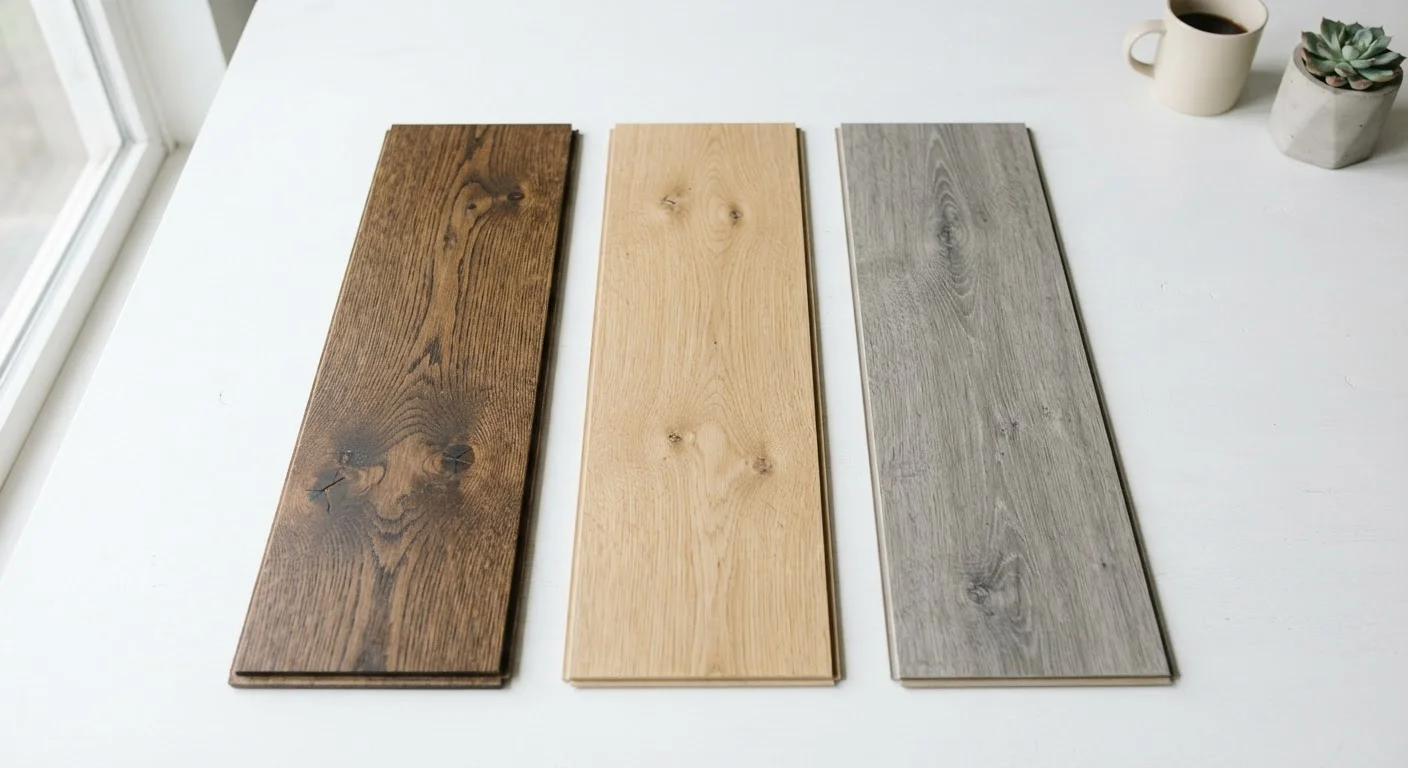
Hardwood is milled from solid wood boards - species like oak, maple, and hickory are common. Each plank is typically ¾ inch thick and can be sanded and refinished multiple times, extending its usable life considerably. Engineered hardwood, a related product, uses a thin hardwood veneer bonded over plywood layers; it behaves similarly but with slightly better moisture tolerance.
Laminate is a synthetic product built from a high-density fiberboard (HDF) core with a photographic image layer beneath a clear wear layer. That image can closely replicate wood, stone, or tile. Because the wood grain is a printed photograph rather than real wood, laminate cannot be sanded or refinished once the wear layer is compromised.
Vinyl plank - often called LVP (luxury vinyl plank) - is constructed from multiple plastic layers, including a printed design layer and a rigid or flexible core. Modern LVP products are 100% waterproof through their full thickness, which is their most significant structural advantage. For readers tackling a broader kitchen renovation, the practical kitchen setup guide covers how flooring choice intersects with long-term functionality.
Durability, Moisture Resistance, and Comfort
| Hardwood | Laminate | Vinyl Plank | |
|---|---|---|---|
| Moisture Resistance | Low - avoid wet areas | Moderate - vulnerable at seams | High - fully waterproof |
| Typical Lifespan | 50-100 years with refinishing | 15-25 years | 20-30 years |
| Refinishable | Yes, multiple times | No | No |
| DIY-Friendly | Often requires professional | Yes, click-lock available | Yes, click-lock available |
| Underfoot Feel | Firm, authentic | Hollow without pad | Soft, sound-absorbing |
| Relative Material Cost | Higher | Lower to moderate | Moderate, wide range |
| Best Room Fit | Living rooms, bedrooms | Low-moisture living areas | Kitchens, baths, basements |
Durability across all three depends on the wear layer thickness and the hardness of the material. Solid hardwood can last 50-100 years when properly maintained, though it dents and scratches more easily in high-traffic zones. Laminate's AC rating (abrasion class) indicates scratch resistance - AC3 and above suits most residential uses. Vinyl plank, especially rigid-core versions, resists dents well and is increasingly rated for commercial use.
Moisture is the most consequential performance factor. Solid hardwood expands and contracts with humidity changes and should not be installed below grade or in bathrooms. Laminate's fiberboard core swells when water penetrates seams, making spill response time critical. Vinyl plank, by contrast, can be submerged without immediate damage - it's the only option of the three genuinely appropriate for full bathrooms and laundry rooms.
Underfoot comfort varies meaningfully. Hardwood feels firm and resonant. Laminate often sounds hollow without an underlayment pad. Vinyl plank, particularly thicker formats with an attached underlayment, absorbs sound and feels softer underfoot - a relevant consideration in multi-floor homes. Keeping all flooring types in good condition over time connects directly to the seasonal home maintenance checklist.
Match Flooring to Room Conditions First
Before comparing aesthetics or price, assess each room's moisture exposure, subfloor type, and traffic level. A flooring material that performs well in a bedroom may fail quickly in a kitchen. Consulting a flooring professional for an in-home assessment can help identify subfloor issues - such as unevenness or moisture intrusion - before they become expensive problems after installation.
Installation, Maintenance, and Long-Term Cost
All three options are available in floating-floor formats (click-lock planks that snap together over the subfloor), making them accessible for DIY installation. Solid hardwood, however, is most often nailed or stapled down by a professional, particularly over wood subfloors, and requires acclimation time in the home before installation.
Maintenance requirements differ in practice. Hardwood needs periodic refinishing - typically every 7-10 years in active households - along with humidity management to prevent warping or gapping. Laminate requires only regular sweeping and damp mopping, but scratches are permanent unless the plank is replaced. Vinyl plank is the most forgiving: it tolerates wet mopping and doesn't require sealing or refinishing.
Cost is difficult to pin down without specific quotes, but the general pattern is: hardwood carries the highest material and installation cost, laminate sits in a middle range, and vinyl plank varies widely depending on core type and thickness. Keep in mind that hardwood's refinishability means its cost can be amortized over a much longer service life.
54%
Homeowners citing durability as top flooring priority
According to the National Association of Realtors' 2022 Remodeling Impact Report, durability ranks as the leading factor in flooring purchase decisions.
~$3-$12/sq ft
Typical vinyl plank installed cost range
Industry cost guides consistently place luxury vinyl plank installation between $3 and $12 per square foot depending on product grade and region.
For those considering broader home investments - including the role flooring plays in property value - general guidance on the mortgage application process can help contextualize renovation spending within an overall financial picture. And if you're developing your eye for material quality across different product categories, the guide to fabric behavior and durability offers a useful parallel framework.