
Why Battery Myths Spread So Easily
Smartphone batteries sit at the intersection of chemistry, software, and consumer habit - which makes them fertile ground for misconceptions. Many popular beliefs originated with older battery technologies like nickel-cadmium (NiCd) and nickel-metal hydride (NiMH), which genuinely did suffer from a "memory effect" requiring full discharge cycles. Today's lithium-ion (Li-ion) cells operate on entirely different electrochemical principles, but the old advice lives on.
There's also the software layer to consider. The percentage your phone displays isn't a direct voltage measurement - it's an estimate produced by a battery management system (BMS) that models charge state based on voltage curves, temperature, and usage history. That model can drift, which is why phones occasionally show surprising jumps or drops in percentage. Understanding this gap between reported and actual state of charge is key to separating myth from reality.
Just as persistent myths exist in other consumer domains - from outdated fashion rules to nutrition folklore - smartphone battery advice has accumulated decades of half-truths worth examining.
The Most Common Battery Myths - Corrected
The following myth-and-fact pairs address the beliefs most consumers encounter, drawing on how lithium-ion chemistry actually works.
Myth
You should always let your battery drain to 0% before recharging to 'reset' it.
Fact
Fully depleting a lithium-ion battery regularly accelerates wear. Partial charges are healthier for this chemistry.
The full-discharge ritual comes from NiCd battery advice, which required periodic deep cycles to prevent voltage depression (the actual "memory effect"). Lithium-ion cells have no such mechanism. In fact, repeatedly draining to 0% puts mechanical stress on the anode material as lithium ions fully vacate the graphite structure. Most battery engineers recommend keeping charge between 20% and 80% for longevity, though occasional full cycles can help recalibrate the battery management system's percentage estimate.
Myth
Leaving your phone plugged in overnight will overcharge and destroy the battery.
Fact
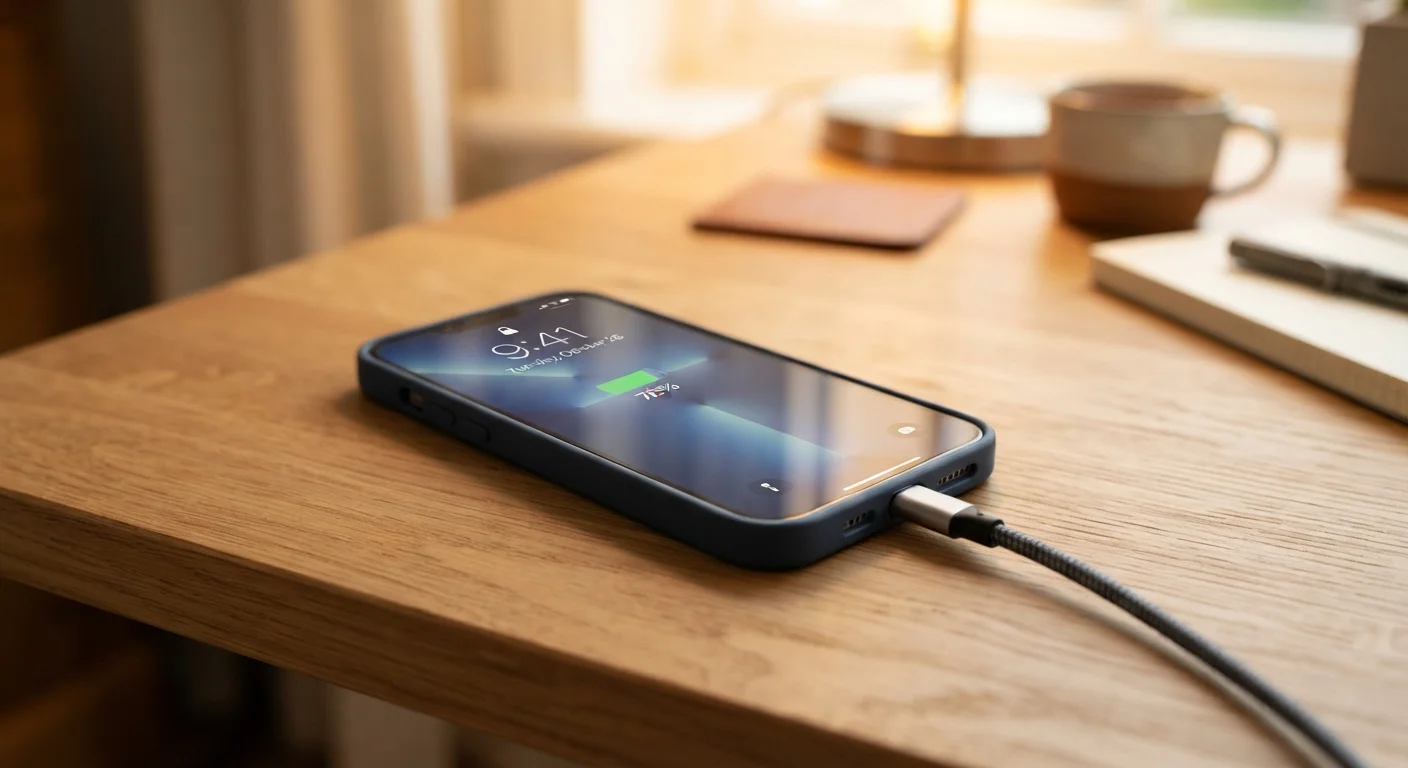
Modern smartphones include overcharge protection that stops current flow once the battery reaches 100%.
Every current-generation smartphone has a battery management IC (integrated circuit) that terminates charging at full capacity. The phone draws power directly from the charger to run the device rather than continuously pushing charge into the cell. The more legitimate concern with overnight charging is heat: if your phone runs warm while charging - due to a thick case or a hot environment - that ambient heat does contribute to gradual degradation. The solution is better ventilation, not avoiding overnight charging entirely.
Myth
Third-party chargers will damage your battery.
Fact
Poorly made chargers can cause problems, but quality third-party chargers that meet relevant safety certifications are generally safe to use.
The real risk isn't brand loyalty - it's build quality and certification. Uncertified chargers may lack adequate surge protection, voltage regulation, or thermal controls. Chargers that carry recognized safety certifications (such as UL listing in the US) and are compatible with your device's charging standard are considered safe by engineering standards. Using a charger with a higher wattage than your phone supports is also not a problem in most cases: the phone's BMS negotiates the charge rate and draws only what it's designed to handle.
Myth
Keeping Wi-Fi and Bluetooth on when not in use drains the battery fast.
Fact
Modern radios in idle or low-power scan mode consume a very small amount of energy compared to the screen or processor.
This was more meaningful in early smartphone generations with less efficient radios. Contemporary Bluetooth Low Energy (BLE) and Wi-Fi 6/6E implementations use minimal power in standby. The display, cellular data activity, and background app processing are the dominant battery consumers in normal use. Toggling Wi-Fi and Bluetooth on and off constantly may actually cost more battery in reconnection overhead than leaving them on. If battery preservation is the goal, reducing screen brightness and limiting background app refresh produces a far greater effect.
Myth
The battery percentage displayed is an accurate, real-time measurement of remaining charge.
Fact
Battery percentage is a software estimate derived from a model, not a direct measurement - and that model can drift over time.
Lithium-ion voltage curves are nonlinear and shift with temperature, age, and load. The battery management system uses algorithms to translate voltage and other inputs into a percentage figure. Over time, if the model's parameters drift from the battery's actual aging state, the displayed percentage can become misleading - showing sudden drops from 20% to 0%, or reading 100% while the true capacity is significantly lower. A "recalibration" cycle (letting the battery drain fully then charging uninterrupted to 100%) can sometimes resync the model, though it should be done infrequently.
What Actually Degrades Your Battery
Two factors cause the most measurable long-term degradation in lithium-ion cells: heat and sustained high state of charge. Electrochemical research consistently shows that storing a battery at or near 100% charge - especially at elevated temperatures - accelerates the breakdown of electrode materials over hundreds of cycles.
~80%
Capacity after 300-500 full charge cycles
Battery manufacturers typically rate lithium-ion cells to retain approximately 80% of original capacity after this many full cycles under standard conditions.
~25°C
Optimal storage temperature for Li-ion cells
Electrochemical studies indicate room temperature storage (around 25°C / 77°F) significantly slows the degradation of lithium-ion electrode materials compared to higher temperatures.
Practically speaking, the most impactful habits are passive ones: avoiding leaving your phone in a hot car, not charging it on a thick case that traps heat, and, if you're storing a device long-term, keeping it around 50% rather than fully charged. These steps matter more than any charging ritual.
Charge cycles also matter. A cycle is defined as using 100% of battery capacity, but not necessarily in one go - two 50% charges count as one cycle. Most manufacturers rate their batteries for 300-500 full cycles before capacity drops to around 80%. Everyday usage rarely exhausts that budget as quickly as users fear.
For a useful parallel on how battery maintenance logic applies to a completely different context, see our look at car battery care - the degradation mechanisms differ, but the principle of proactive habit-building over reactive fixes holds across both.
Heat Is the Biggest Threat to Battery Health
Leaving your phone on a car dashboard or charging it under a pillow can expose the battery to temperatures that meaningfully shorten its usable lifespan over time. Lithium-ion cells experience accelerated electrolyte breakdown above roughly 40°C (104°F). Even occasional extreme heat events can cause permanent, irreversible capacity loss that no software update or charging habit can reverse.