How Each Connection Type Handles Audio
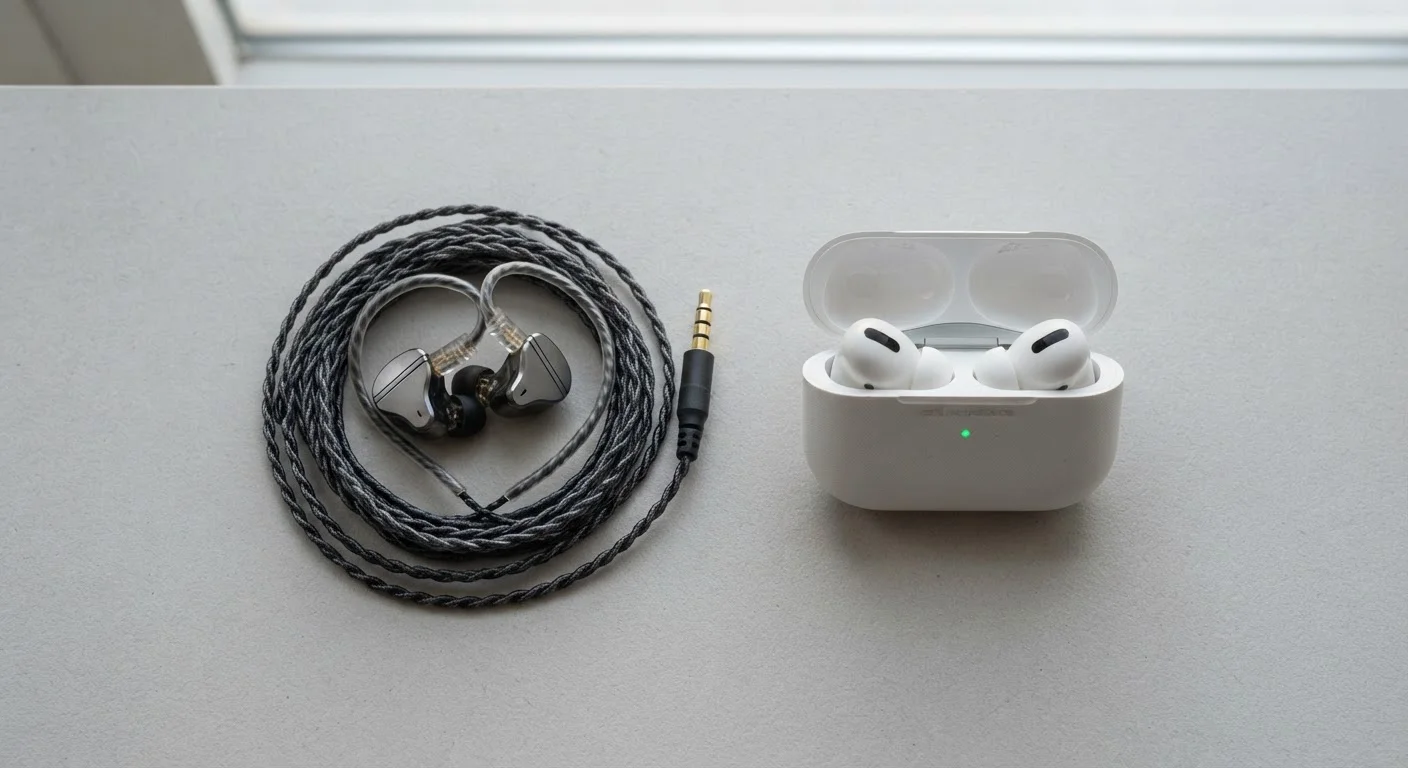
Wired earbuds receive an analog or digital audio signal directly through a physical cable. Because there's no conversion step between your device and your ears, the signal path is straightforward and introduces no compression artifacts. This makes wired earbuds a dependable choice for anyone who wants to hear a recording with minimal processing in between.
Wireless earbuds use Bluetooth, which requires audio to be encoded, transmitted, and decoded. That process involves compression through a codec - the algorithm governing how audio data is packaged. Common codecs like SBC are widely compatible but more heavily compressed; higher-quality codecs such as aptX, AAC, and LDAC preserve more detail. However, codec availability depends on both the earbuds and the source device supporting the same standard. The practical gap between wired and wireless audio quality has narrowed considerably in recent years, but it hasn't fully closed for discerning listeners.
| Criterion | Wired Earbuds | Wireless Earbuds |
|---|---|---|
| Audio signal | Uncompressed, lossless | Codec-compressed via Bluetooth |
| Latency | Near zero | Low to moderate (codec-dependent) |
| Battery required | No | Yes (5-8 hrs typical) |
| Headphone jack needed | Yes (or adapter) | No |
| Freedom of movement | Limited by cable | Unrestricted |
| Noise cancellation | Passive only | Active and passive options |
| Smart features | Minimal | Touch controls, ANC, auto-pause |
| General durability risk | Cable wear over time | Battery degradation over time |
Latency: Where Wired Still Holds a Clear Edge
Latency - the delay between audio being processed and reaching your ears - is one area where wired earbuds maintain a meaningful advantage. A wired connection introduces delay measured in fractions of a millisecond, which is imperceptible in any context. Bluetooth latency, depending on the codec and device, has historically ranged from roughly 100ms to over 200ms.
For casual music listening, that delay is rarely noticeable. For video playback on a phone or laptop, modern wireless earbuds using aptX Low Latency or similar codecs can reduce the gap significantly - often to the point where most viewers won't perceive a sync issue. For gaming, however, even moderate latency can disrupt the experience, making wired the more reliable option for that specific use case.
~200ms
Typical Bluetooth SBC codec latency
Standard SBC Bluetooth codec latency is commonly cited in audio engineering references as ranging from 100ms to over 200ms depending on implementation.
5-8 hrs
Average wireless earbud battery life per charge
Consumer electronics reviews and manufacturer specifications consistently place single-charge playback for wireless earbuds in the 5-8 hour range.
~1ms
Typical wired earbud audio latency
Wired analog connections introduce latency measured in fractions of a millisecond, generally considered imperceptible to human listeners.
Battery Life, Convenience, and Everyday Trade-Offs
Wireless earbuds require charging, and that introduces a dependency wired earbuds simply don't have. Most wireless models deliver between five and eight hours of playback per charge, with a charging case extending total use to anywhere from 20 to 36 hours before you need a power outlet. For most daily routines, this is sufficient - but forgetting to charge means no audio.
Wired earbuds draw power from the connected device, so they never need independent charging. The trade-off is the cable itself: it can snag, tangle, and restrict movement. If your phone lacks a 3.5mm headphone jack - now common across many flagship and mid-range smartphones - you'll need a Lightning or USB-C adapter, adding a step and a potential failure point.
Wireless earbuds also tend to pack in additional features: touch controls, automatic ear-detection that pauses playback when you remove them, voice assistant access, and active noise cancellation. For more on how noise cancellation actually works and its real-world limits, see our guide to headphone noise cancellation.
Codec Compatibility Matters
Even if your wireless earbuds support a high-quality codec like LDAC or aptX HD, your source device must support the same codec for it to be used. When there's a mismatch, both devices default to a lower common standard such as SBC. Before assuming you're getting high-quality wireless audio, verify that your phone and earbuds share a compatible high-tier codec.
Which Format Fits Your Listening Habits?
The honest answer is that neither format dominates in every scenario. Wired earbuds suit listeners who rarely stray from a desk or couch, care deeply about audio fidelity, or use their earbuds primarily for gaming. They're also a practical fallback for anyone who regularly forgets to charge devices.
Wireless earbuds suit people who move around frequently, want a clutter-free experience, or need features like noise cancellation for a commute or open-plan office. If you're already invested in a smart audio ecosystem - perhaps alongside a smart speaker at home - wireless earbuds often integrate more naturally with voice assistants and multi-device pairing.
Understanding your primary use case - whether it's focused music listening, calls, gaming, or fitness - is the most reliable way to narrow down the format that will actually serve you day to day.