What Smart Speakers Actually Do Well
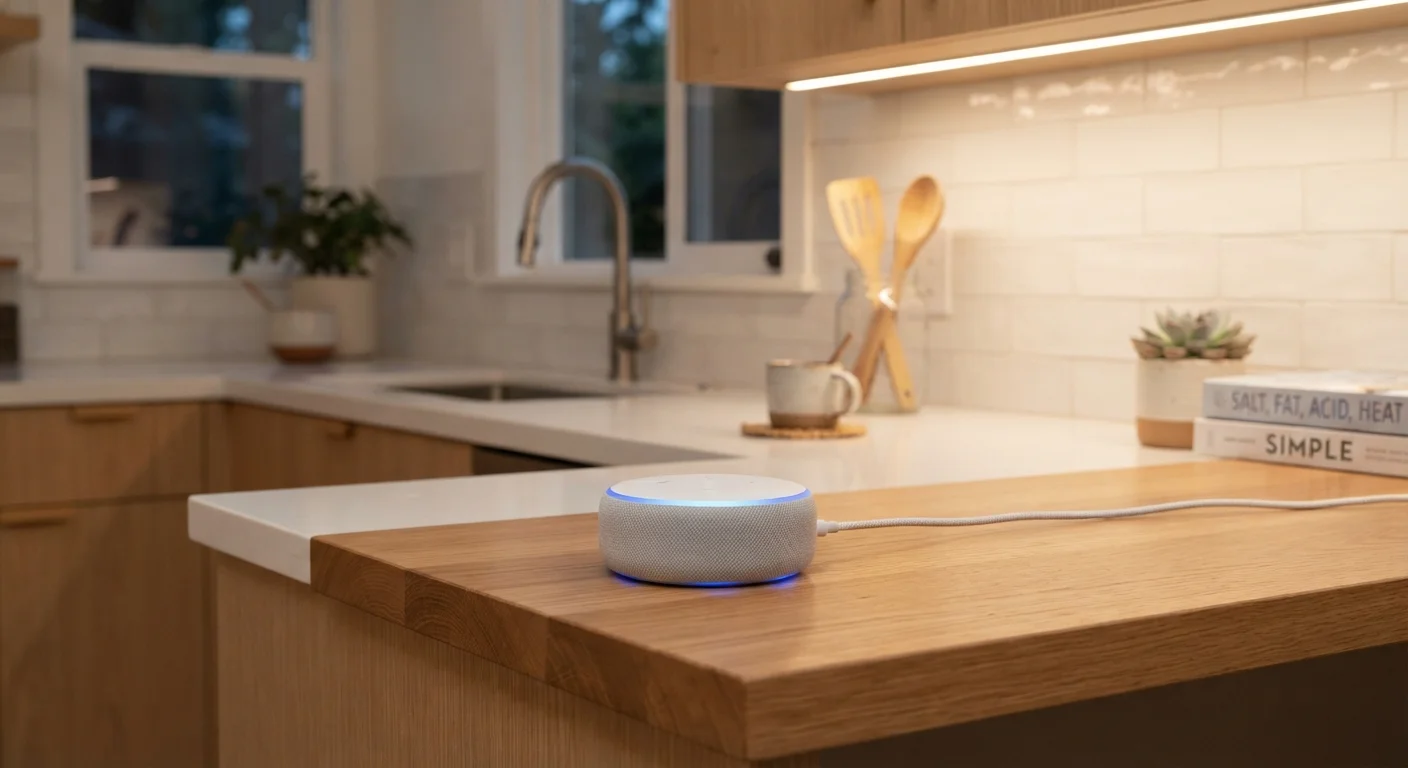
Smart speakers handle a narrow set of tasks with genuine ease: setting timers while your hands are full, playing music on command, checking the weather before you leave the house, and controlling compatible smart home devices like lights or thermostats. For these everyday micro-tasks, the friction reduction is real.
The hands-free dimension matters more than it sounds. Cooking, cleaning, or managing kids are situations where picking up a phone isn't always practical. A well-placed voice command genuinely speeds things up. For users managing smart home ecosystems - locks, lighting scenes, or routines - a smart speaker can serve as a low-effort hub that ties multiple devices together without requiring a separate app interaction each time.
Hands-free convenience for routine daily tasks
Setting timers, adding items to shopping lists, and playing music require zero physical interaction - genuinely useful during cooking or cleaning.
Effective hub for smart home device control
Compatible with a wide range of smart home devices, a speaker can consolidate lighting, thermostat, and lock control into simple voice commands.
Quick access to information and reminders
Weather forecasts, unit conversions, calendar reminders, and general questions can be answered in seconds without opening an app or browser.
Accessible interface for some users with mobility limitations
Voice-only interaction lowers barriers for users who find touchscreens or keyboards difficult to use due to physical or visual impairments.
For a broader view of evaluating connected gadgets before buying, see our consumer purchasing field guide.
The Privacy Trade-Off You Shouldn't Ignore
Smart speakers use always-on microphones that listen for a "wake word" before processing a command. In practice, these devices occasionally activate on words that sound similar to their trigger phrase - and when they do, audio snippets may be sent to the manufacturer's servers for processing. Most major platforms allow users to review and delete these recordings, but few users actually do.
Your Voice Data and How It's Used
Most smart speaker platforms process voice commands on remote servers and may retain recordings for model training unless users opt out or delete them manually. Settings menus on each platform typically include a voice history section where recordings can be reviewed and deleted. Enabling the physical mute button when the device isn't needed is one of the most straightforward ways to limit unintended capture. Check your specific device's privacy documentation for details, as policies vary by manufacturer.
The data collected isn't limited to commands. Usage patterns, device interactions, and voice profiles can be retained and used to improve the underlying AI models. Reviewing your device's privacy settings and enabling a physical mute switch when the speaker isn't needed are two concrete steps that reduce exposure without eliminating the product's utility entirely.
For a practical walkthrough of privacy settings across connected devices, see which privacy settings actually matter.
Accuracy, Limitations, and the Dependency Problem
Voice recognition has improved considerably, but it isn't universal. Users with strong regional accents, speech impediments, or non-native English often encounter noticeably higher error rates. Noisy environments - a running dishwasher, a TV in the background - further degrade performance. Commands that involve nuance, comparison, or multi-step logic tend to produce unreliable results.
Always-on microphone raises data privacy concerns
The device listens continuously for its wake word, and accidental activations can result in audio snippets being sent to manufacturer servers without the user's awareness.
Voice recognition accuracy is inconsistent
Users with accents, speech differences, or noisy environments regularly experience misheard commands, leading to incorrect responses or unintended actions.
Ecosystem lock-in limits future flexibility
Smart speakers are optimized for one manufacturer's ecosystem; switching platforms often requires replacing compatible accessories and rebuilding automations.
Potential for creeping dependency on voice assistance
Routine reliance on voice answers for basic questions can subtly reduce habits of independent problem-solving, particularly for younger users.
Ongoing subscription costs for full functionality
Music streaming, premium assistant features, and cloud storage often require paid subscriptions that add to the real cost of ownership beyond the hardware price.
There's also a subtler issue worth naming: habitual reliance on voice assistants for tasks like unit conversions, spelling, or quick calculations can gradually erode the habit of looking things up independently. This isn't catastrophic, but it's worth being aware of - especially for households with children who are still building foundational knowledge habits.
~35%
U.S. adults who own a smart speaker
Pew Research Center surveys have consistently found roughly one-third of American adults report owning a smart speaker of some kind.
~25%
Accidental activations per day reported by some users
Academic research published in proceedings on usable privacy and security has documented frequent unintended activations in typical home environments.
Ecosystem lock-in is another real constraint. Smart speakers are designed to work best within a single manufacturer's product universe. Switching platforms later often means replacing compatible accessories or losing automations you've built up - costs that rarely appear in the initial purchase decision. Our article on hidden electronics ownership costs covers this dynamic in more detail.
Making an Informed Decision
Smart speakers aren't inherently good or bad purchases - they're context-dependent tools. If your household has a stable smart home setup, runs on predictable routines, and includes people comfortable managing device settings, the convenience case is solid. If privacy is a significant concern, or if your home environment makes voice recognition unreliable, the frustration-to-utility ratio can tip the wrong way quickly.
Before committing, it's worth mapping out which tasks you'd realistically use it for. A device that earns its counter space for five daily tasks is a different proposition from one that sits dormant most of the week. For guidance on evaluating any electronics purchase through that lens, the Home Essentials hub covers household product decisions more broadly.
Whatever you decide, treat the initial purchase as the beginning of an ongoing relationship with a connected device - one that benefits from periodic review of its settings, permissions, and actual usage patterns.