What Is Noise Cancellation, Really?
"Noise cancellation" is a marketing umbrella that covers two very different technologies: active noise cancellation (ANC) and passive noise isolation. Headphone packaging rarely distinguishes between them clearly, which leads to frequent consumer disappointment when a product doesn't perform as imagined.
Understanding the difference - and the physics behind each - is the single most useful thing you can do before evaluating any headphone or earbud purchase. This guide covers both technologies honestly, including where each one genuinely helps and where it won't.
For a broader look at how form factor affects everyday listening, see our comparison of wired vs. wireless earbuds.
Active Noise Cancellation (ANC) Explained
ANC is an electronic system, not a physical barrier. Here's how it works in practice:
- External microphones on the headphone housing continuously sample the ambient sound around you.
- A processor analyzes the incoming sound wave in real time.
- The headphone's drivers produce a secondary sound wave that is the mathematical inverse - or "anti-phase" - of the detected noise.
- When the two waves meet at your ear, they partially cancel each other out through a principle called destructive interference.
The entire process must happen within milliseconds to be effective, which is why the processor quality matters significantly. Some headphones also use feedback microphones positioned inside the ear cup to sample sound that has already reached the ear and refine cancellation further.
Test any ANC headphone with the audio paused, not playing - this isolates how much the cancellation system alone is doing versus how much you're simply masking noise with volume.
Many consumers mistake loud playback for effective ANC. Evaluating cancellation in silence reveals the true performance envelope of the system.
If you wear glasses, test over-ear fit carefully before committing - frame arms disrupt the ear cup seal, reducing passive isolation and making ANC work harder with diminished results.
Even a small gap in the ear cup seal caused by eyeglass temples can meaningfully degrade both passive isolation and ANC efficiency, a well-documented issue in headphone acoustics.
A key distinction consumers often miss: ANC reduces the perception of noise - it does not eliminate it. The degree of reduction is measured in decibels (dB), and real-world performance varies by frequency and environment.
Passive Noise Isolation: The Simpler Alternative
Passive noise isolation requires no electronics. It works by physically blocking sound waves from reaching your ear canal - through the mass and seal of the ear cup material, earbud tip fit, or headphone padding.
Fit Quality Matters as Much as Technology
Whether you rely on passive isolation or ANC, the physical fit of the headphone is the foundation. A poorly sealed ear cup or a loose-fitting earbud tip undermines both technologies equally. Before evaluating any noise-reduction claim, ensure the fit is as snug and consistent as the design allows.
Over-ear headphones with thick, dense padding and a tight headband seal generally provide more passive isolation than on-ear designs. In-ear monitors (IEMs) with well-fitted silicone or foam tips can block a surprisingly wide range of frequencies through physical occlusion alone.
Passive isolation is effective across a broader frequency range than ANC - including many mid- and high-frequency sounds that ANC struggles with. It also requires no battery power and introduces no processing latency. The trade-off is physical comfort: the tighter or thicker the seal, the more clamping force or occlusion pressure a listener may experience over long sessions.
Where ANC Works Well - and Where It Falls Short
ANC performance is highly frequency-dependent. This is not a flaw - it's a consequence of the physics involved.
ANC excels at:
- Low-frequency, steady-state noise - airplane cabin hum, train engines, HVAC systems, road noise in a car
- Consistent background drone - open-plan office ventilation, generator hum
ANC is largely ineffective against:
- High-frequency sounds - voices, keyboard clatter, utensil sounds
- Sudden or unpredictable noises - a door slamming, a dog barking
- Complex, rapidly changing soundscapes - crowded restaurants, live events
Don't Rely on ANC for Safety-Critical Situations
Using any noise-cancelling headphone in environments where you need to hear warnings, traffic, or emergency signals - such as while cycling on roads or crossing streets - creates a genuine safety risk. ANC and high passive isolation both reduce situational awareness. Use transparency mode or remove headphones entirely in these contexts.
One common scenario where this matters: commuters in loud subway cars often find ANC reduces engine rumble well but does little to mask nearby conversations or platform announcements. Managing that expectation before purchase prevents frustration.
Many headphones now offer a transparency mode (sometimes called ambient sound mode) - a setting that intentionally passes outside audio through the microphones so you can hear your surroundings without removing the headphones. This is useful at crosswalks, in transit, or when briefly interacting with others.
20-30 dB
Typical ANC reduction in low-frequency noise
Consumer-grade ANC headphones generally reduce steady low-frequency ambient noise by roughly 20-30 decibels under real-world conditions, with variance by environment and product.
~85 dB
Airplane cabin noise level
Typical commercial aircraft cabin noise sits around 85 decibels, making it one of the most effective use cases for ANC technology.
15-40%
Potential battery life reduction with ANC on
Enabling ANC typically reduces playback battery life by 15-40% compared to ANC-off claims, depending on the headphone model and ANC intensity setting.
Key Specs and Features to Understand
When reviewing headphone specifications related to noise cancellation, these are the terms worth understanding:
- ANC Attenuation (dB)
- How much the headphone claims to reduce ambient noise. Higher numbers represent greater reduction, but manufacturer-reported figures are measured under controlled conditions that may not reflect your environment.
- Feedforward vs. Feedback ANC
- Feedforward uses external mics only; feedback uses internal mics to refine the signal; hybrid systems use both. Hybrid systems generally provide more consistent cancellation across frequencies.
- Battery life with ANC enabled
- ANC draws power. A headphone advertised at 40 hours playback may deliver significantly fewer hours with ANC active. Always check the manufacturer's ANC-on battery spec specifically.
- Adaptive ANC
- Some headphones automatically adjust ANC intensity based on ambient noise levels detected in real time. This can improve comfort and battery efficiency in quieter settings.
Manufacturer Specs Are Measured in Ideal Conditions
ANC performance figures published by manufacturers are typically measured in laboratory or anechoic environments using standardized test tones. Real-world performance in a subway car, busy café, or airplane will differ - sometimes substantially. Use published specs as a relative comparison tool between products, not as a guarantee of real-world experience.
Choosing the Right Approach for Your Situation
Rather than chasing a headline specification, match the technology to your most common listening context:
- Frequent air travel or long commutes by train or bus: ANC over-ear headphones provide the most meaningful benefit here, reducing low-frequency travel fatigue.
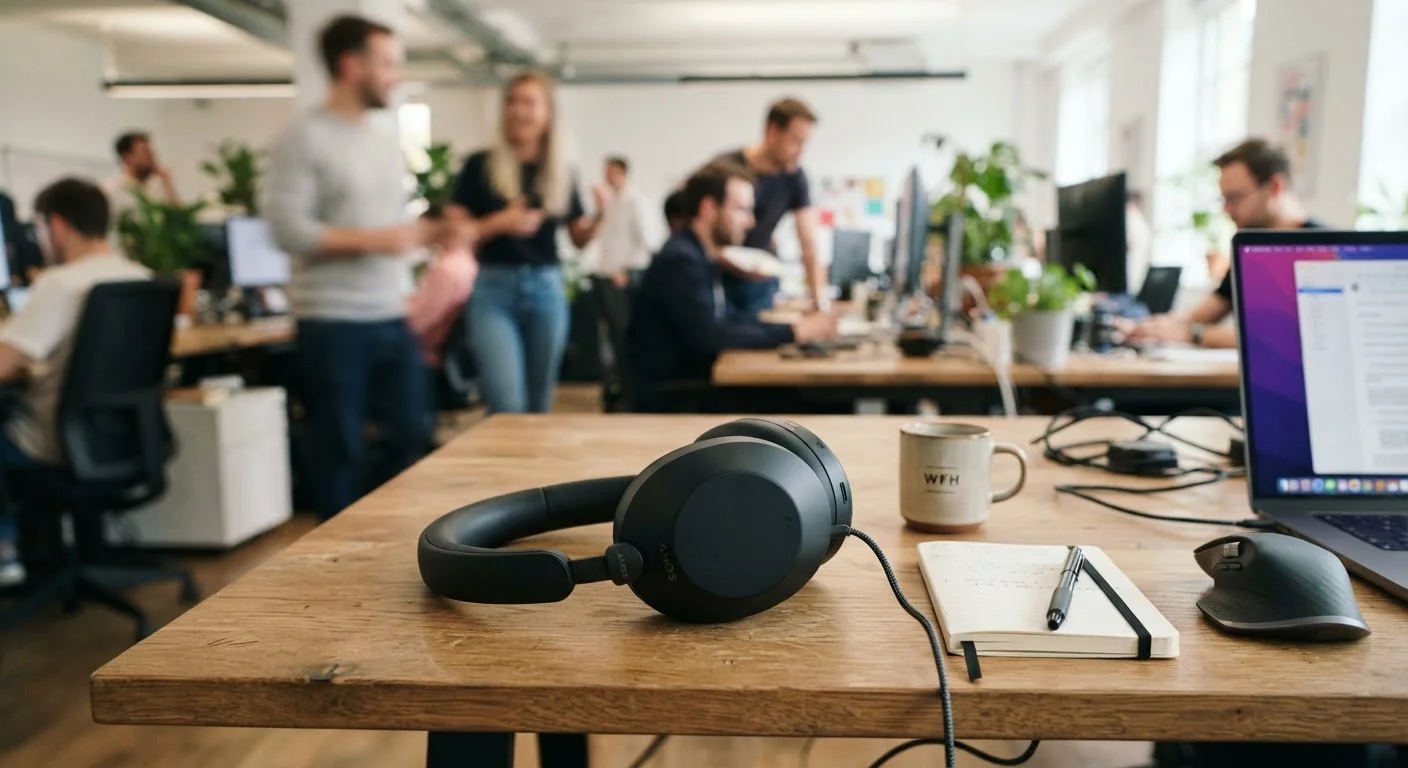
- Open-plan office work: A combination of passive isolation and ANC helps with HVAC noise; don't expect voice masking.
- Focus work in a quiet home: Passive isolation alone - even good foam eartips on earbuds - may be sufficient without the battery dependency of ANC.
- Running or outdoor use: Transparency mode is often more useful than ANC outdoors, where situational awareness matters for safety.
- Recording or studio monitoring: ANC can introduce subtle artifacts that affect critical listening; passive isolation is the standard in professional settings.
“The goal of noise cancellation should be to reduce listening fatigue, not to create total silence. When people understand that distinction, they tend to be far more satisfied with their headphones.”
— Audio engineering research community, Consensus view among psychoacoustics and consumer audio researchers
Ultimately, the goal is to reduce listening fatigue and distraction - not to achieve perfect silence. Any system that helps you hear your audio more clearly at a comfortable volume, in your actual environment, is doing its job.