
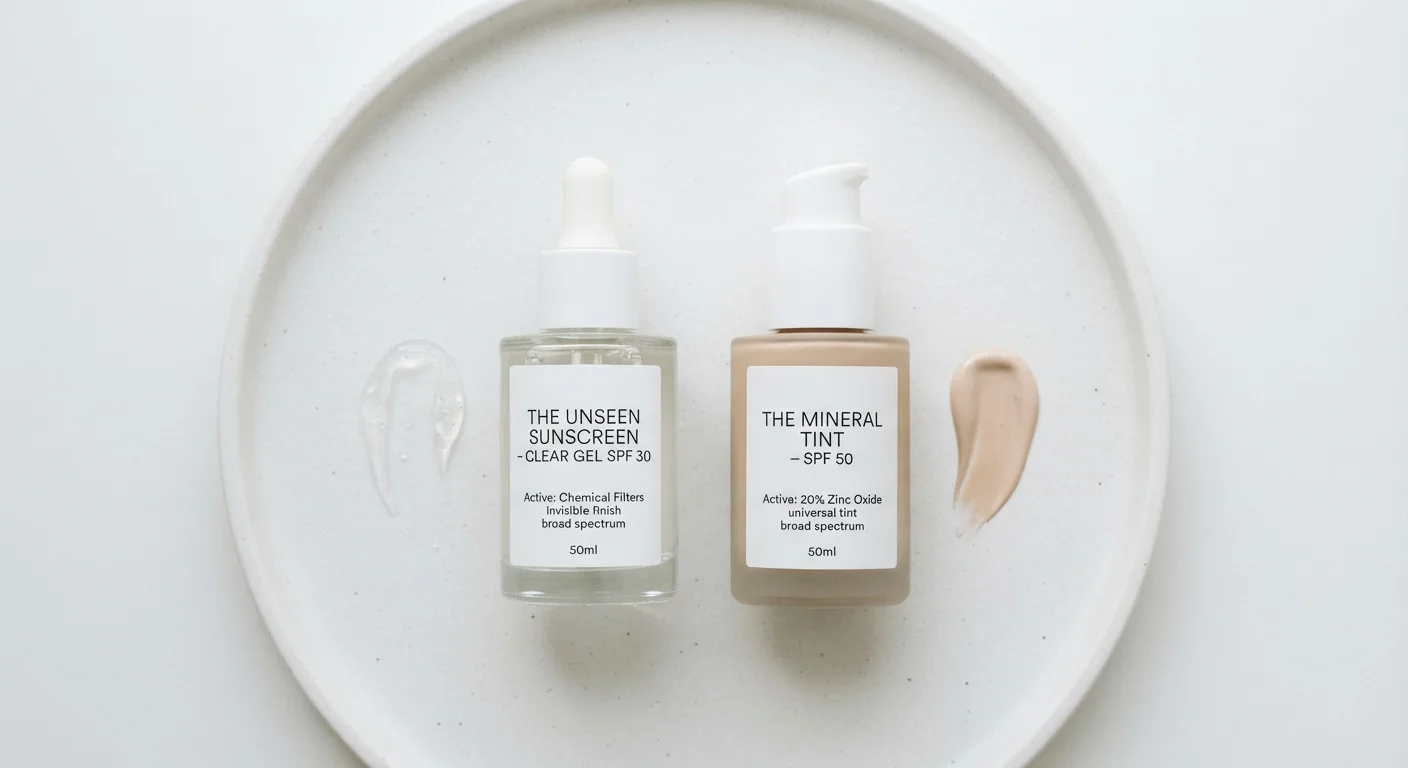
The Core Difference: Absorption vs. Reflection
Both chemical and physical sunscreens are designed to prevent UV radiation from damaging skin cells — but they go about it in completely different ways, and understanding that distinction helps you make a more informed choice for your skin.
Chemical sunscreens work through a photochemical reaction. Their active ingredients — which may include avobenzone, octinoxate, homosalate, or octisalate — are absorbed into the upper layer of skin. When UV rays hit, these molecules absorb the energy and convert it into a small amount of heat, which then dissipates from the skin. Because they need time to bind to skin, most guidelines suggest applying them about 15–30 minutes before sun exposure.
Physical sunscreens (also called mineral sunscreens) use zinc oxide, titanium dioxide, or both as their active ingredients. These minerals sit on the skin's surface and work by reflecting and scattering UV radiation before it can penetrate. Because they don't need to be absorbed, they're generally considered effective right after application. See our overview of why sunscreen matters for broader context on UV protection science.
| Criterion | Chemical Sunscreen | Physical Sunscreen |
|---|---|---|
| Mechanism | Absorbs and converts UV to heat | Reflects and scatters UV rays |
| Active ingredients | Avobenzone, octinoxate, octisalate, etc. | Zinc oxide, titanium dioxide |
| Time to effectiveness | ~15–30 min after application | Effective immediately after application |
| Texture & finish | Lightweight, invisible on skin | Thicker; may leave white cast |
| Skin sensitivity suitability | May irritate sensitive skin | Generally gentler on reactive skin |
| Compatibility with makeup | Blends easily under foundation | Can be trickier to layer |
| Broad-spectrum coverage | Available when properly formulated | Zinc oxide covers UVA and UVB broadly |
Texture, Finish, and Skin Compatibility
Texture is often what drives sunscreen loyalty — and this is where the two types diverge most noticeably in everyday use.
Chemical formulas tend to be thinner and more elegantly formulated, blending invisibly into most skin tones. This makes them popular for daily wear, especially under makeup. However, some chemical filters can cause stinging around the eyes or mild irritation for those with sensitive or reactive skin. A small subset of people may also experience contact sensitivity to specific chemical UV filters.
Physical sunscreens have historically been thicker and prone to leaving a white or grayish cast — a significant drawback for medium-to-deep skin tones. Modern mineral formulas have improved considerably, with micronized particles and tinted versions narrowing the gap. That said, some residual cast may still occur depending on the formula and complexion.
2
FDA-recognized mineral UV filter ingredients
The U.S. FDA recognizes zinc oxide and titanium dioxide as the active ingredients in physical sunscreens, with both having established safety profiles.
~15 min
Lead time needed for chemical sunscreens
General guidance from dermatology sources recommends applying chemical sunscreen 15–30 minutes before sun exposure for the filter to fully bind to skin.
SPF 30+
Minimum SPF recommended for daily use
Major dermatology organizations, including the American Academy of Dermatology, recommend a minimum of SPF 30 and broad-spectrum coverage for everyday protection.
If you're still figuring out how your skin tends to react to products in general, understanding your skin type is a useful foundation before selecting a sunscreen formula.
What to Consider When Choosing
There's no single right answer — the best sunscreen is the one you'll actually use consistently and reapply as needed. A few practical considerations can guide your decision:
- Skin sensitivity: If your skin reacts easily to products, mineral filters are often the gentler starting point. Zinc oxide in particular has a long track record of tolerability.
- Skin tone: White cast from physical formulas is a real concern for deeper complexions. Tinted mineral sunscreens or chemical formulas may be a more comfortable option.
- Daily routine: If layering products is part of your morning ritual, a lightweight chemical formula typically plays better with serums, moisturizers, and makeup.
- Environmental concerns: Some chemical filters — particularly oxybenzone and octinoxate — have been the subject of research regarding marine ecosystem impact. Regulations vary by jurisdiction, and some destinations have restrictions. This is a personal values consideration, not a settled scientific verdict.
- Broad-spectrum coverage: Regardless of type, always choose a formula labeled broad-spectrum, which means it protects against both UVA and UVB rays. SPF alone only measures UVB protection.
This article is for general educational purposes only and does not constitute medical or dermatological advice. For personalized skincare guidance, consult a qualified dermatologist or healthcare professional.