
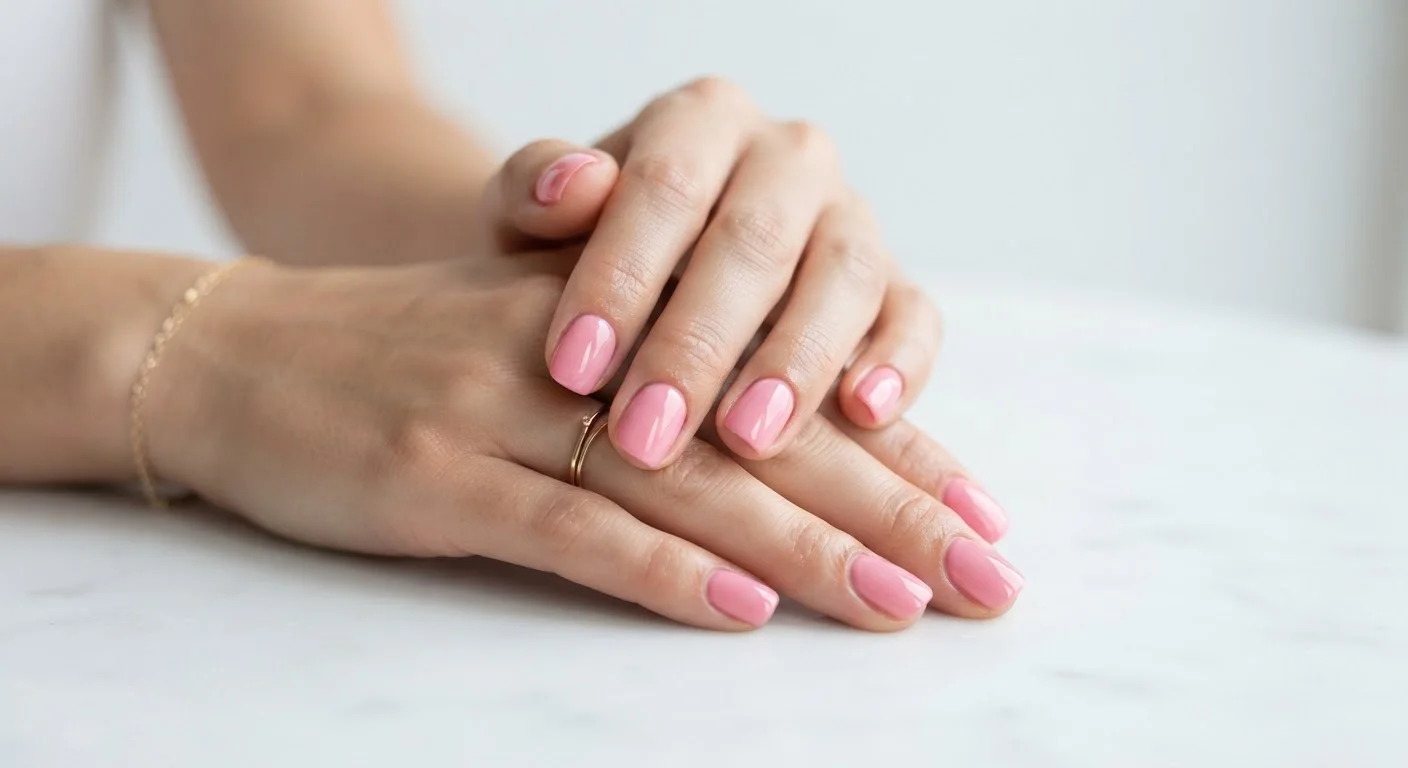
Why Polish Never Seems to Last
If your manicure chips within a day or two, the culprit is rarely the polish itself. More often, it comes down to skipped prep steps, thick application, or everyday habits that work against your hard work. The good news: a consistent nail care routine can reliably add several extra days of wear — no salon visit required.
Think of a manicure like a paint job on a wall. No matter how good the paint is, it won't adhere well to a dirty or oily surface. The same principle applies to your nails. Getting the surface right before you even open the bottle is where lasting results begin.
Store Polish the Right Way
Keeping nail polish in a cool, dark place — rather than a sunny windowsill or a steamy bathroom — extends its shelf life and helps it apply more smoothly. Always store bottles upright and wipe the neck clean before sealing to prevent the cap from sticking. A thickened polish can sometimes be saved with a drop or two of nail polish thinner (not remover).
The Prep Phase: Where Lasting Manicures Are Won
Proper nail prep takes only a few extra minutes but makes a dramatic difference in how long your color holds. Follow these steps before every application:
- Remove old polish completely. Residue left behind creates an uneven base. Use a non-acetone remover for everyday use, or acetone for stubborn glitters — just follow up with a good moisturizer afterward.
- Shape with a file, not scissors. File in one direction rather than sawing back and forth to reduce nail stress and splitting. Consistent shape also helps coats apply more evenly.
- Push back cuticles gently. Cuticles creeping onto the nail plate lift polish at the base. Use a rubber cuticle pusher or a wooden orange stick after a warm soak.
- Buff lightly. One or two gentle passes with a fine-grit buffer smooths ridges without thinning your nails.
- Dehydrate the nail plate. This is the step most people skip. Swipe each nail with a cotton pad soaked in plain rubbing alcohol or a nail prep solution to remove oils. Even clean-looking nails have natural oils that repel polish.
Always dehydrate nails with alcohol before applying any base coat.
Natural oils on the nail plate prevent polish from bonding properly, leading to premature peeling. Even freshly washed hands retain enough oil to interfere with adhesion. Removing that oil is the single highest-impact prep step.
Apply polish in two thin coats rather than one thick coat.
Thick coats take significantly longer to cure all the way through, leaving the center soft and prone to denting. Thin coats dry faster, bond better, and produce a smoother finish.
Cap the free edge of each nail with every coat, including base and topcoat.
The tip of the nail takes the most physical stress and is where chips almost always start. Sealing it with each layer creates a continuous bond that resists peeling from the edge inward.
Refresh your topcoat every two to three days to extend wear.
Topcoats wear down faster than the color beneath them. Reapplying every few days renews the protective barrier and restores shine without redoing the entire manicure.
Wear rubber gloves whenever cleaning or doing dishes.
Detergents strip the topcoat's surface and repeated water exposure causes the nail plate to swell and contract, breaking the bond between nail and polish. Gloves are the simplest barrier against both.
Application Technique That Actually Holds
Once your nails are prepped, how you apply each coat matters just as much as what you apply.
Always start with a base coat — it bonds the color to the nail and protects against staining. Let it dry fully before moving on. Apply color in two thin coats rather than one thick one. Thick coats trap solvents that take longer to evaporate, leading to denting and peeling. Cap the free edge (the very tip of each nail) with each coat to seal it against chipping. Finish with a topcoat, then cap the edges again. For ongoing maintenance, apply a fresh layer of topcoat every two to three days — this alone can extend your manicure by nearly a week.
3–5 days
Extra wear from consistent topcoat reapplication
Nail care professionals commonly estimate that refreshing topcoat every two to three days can add several days to overall manicure life compared to applying it once and leaving it.
1 hour
Minimum wait time before getting nails wet
Most nail technicians recommend waiting at least one hour after application before exposing fresh polish to water to allow the layers to begin fully curing.
Aftercare: Protecting Your Manicure Day to Day
Even a flawless application will deteriorate quickly without thoughtful aftercare. A few small habit shifts make a noticeable difference:
- Wait before getting your hands wet. Try to keep nails dry for at least one hour after painting — longer if possible. Water causes nails to expand slightly, which can loosen fresh polish before it fully cures.
- Moisturize your cuticles daily. Dry, cracked cuticles are a sign of dehydration that can affect the nail plate too. A drop of cuticle oil worked in at night keeps the surrounding skin flexible and reduces lifting at the base. This pairs well with an evening self-care wind-down — just as your skin does its best repair work overnight (explore nighttime skin habits that pay off), your nails benefit from that same dedicated care.
- Wear gloves for cleaning and dishes. Detergents and prolonged water exposure are major polish killers. Keep a pair of rubber gloves near the sink and make them a non-negotiable part of your routine.
- Use your fingertips, not your nails. Typing, opening cans, and peeling labels all create micro-chips at the tips. Being mindful of how you use your hands costs nothing and adds days to your manicure.
When Nails Need More Than Polish
If you notice persistent peeling, pitting, discoloration, or brittleness that doesn't improve with better nail care habits, it may be worth mentioning to a dermatologist or primary care provider. These can sometimes be signs of an underlying nutritional deficiency or skin condition that goes beyond surface-level care. This article is for general informational purposes and is not a substitute for professional medical advice.