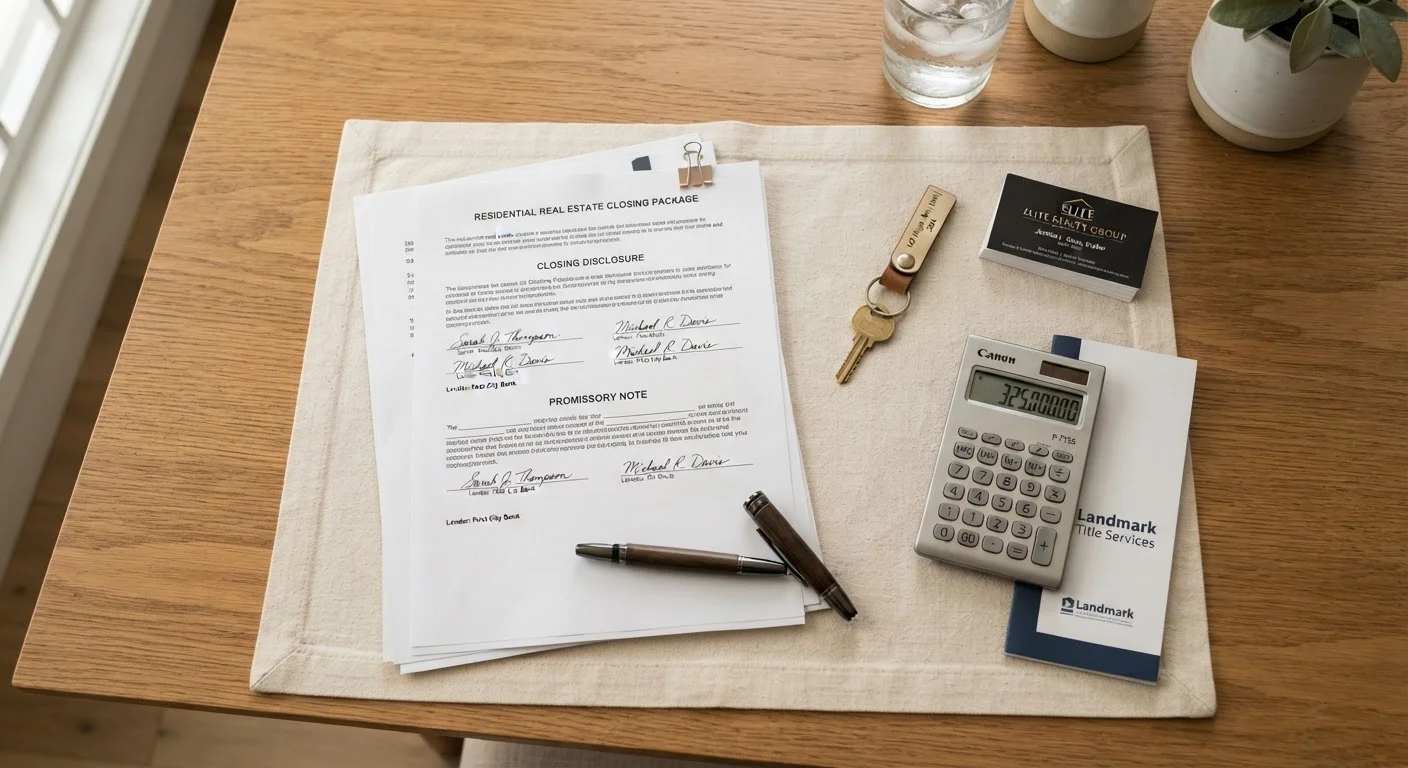

What Refinancing Actually Does
When you refinance a mortgage, you're taking out an entirely new home loan to replace the one you currently have. The new loan pays off the old balance, and you begin repaying the new loan — ideally under terms that better suit your financial situation. It is not a modification of your existing loan; it's a fresh origination process that involves an application, underwriting, appraisal, and closing.
There are two primary types. A rate-and-term refinance changes your interest rate, your loan term (how many years remain), or both — without drawing additional cash from your equity. A cash-out refinance allows you to borrow more than your remaining balance, receiving the difference as cash you can use for home improvements, debt consolidation, or other purposes. For a grounding in how mortgages are structured before diving into refinancing, see our plain-language mortgage explainer.
Both types follow roughly the same procedural path: you apply with a lender, provide financial documentation, your home is appraised to confirm current value, underwriting reviews everything, and you attend a closing where you sign new loan documents. The process typically takes 30–60 days.
The Costs You Need to Count
Refinancing is not free. Closing costs on a refinance generally run between 2% and 5% of the loan amount. On a $300,000 balance, that's $6,000–$15,000 due at closing, though exact figures vary by lender, loan type, and state. These fees cover appraisal, title search, origination charges, and government recording fees, among others.
2–5%
Typical refinance closing cost range
Industry estimates from sources including the Consumer Financial Protection Bureau place average refinance closing costs between 2% and 5% of the loan amount.
30–60 days
Average time to close a refinance
Most refinances take between one and two months from application to closing, depending on lender volume, documentation speed, and appraisal scheduling.
Because of these costs, the central question isn't whether you can get a lower rate — it's whether you'll recoup those costs before you sell or pay off the home. The break-even point is how long it takes for monthly savings to offset what you paid at closing. If a refinance saves you $200 per month and costs $6,000 upfront, you break even in 30 months. If you plan to move in two years, the math doesn't work in your favor.
Some lenders offer "no-closing-cost" refinances, which roll fees into the loan balance or offset them with a slightly higher rate. These can make sense in specific situations but are rarely free in the long run — understanding key loan terminology like APR and amortization helps you compare options accurately.
Pros and Cons of Refinancing
Refinancing carries real advantages, but it's not the right move for every homeowner in every market. Here's a balanced look at what's on each side of the ledger.
Potentially reduces your monthly mortgage payment
If rates have dropped meaningfully since you took out your original loan, refinancing can lower your interest rate and reduce what you owe each month, freeing up cash flow.
Can shorten the loan term and reduce total interest
Refinancing from a 30-year to a 15-year mortgage increases monthly payments but can significantly reduce the total interest paid over the life of the loan.
Converts an adjustable rate to a fixed rate
Homeowners with adjustable-rate mortgages (ARMs) approaching a rate adjustment can lock in a fixed rate through refinancing, providing payment predictability.
Cash-out option provides access to home equity
A cash-out refinance allows you to tap built-up equity for substantial expenses — home renovations, education costs, or high-interest debt consolidation — at mortgage interest rates, which are generally lower than personal loan or credit card rates.
Removes private mortgage insurance (PMI)
If your original down payment was below 20% but your home has since appreciated, refinancing at a lower LTV can eliminate PMI, reducing your monthly costs.
Upfront closing costs are substantial
Paying 2–5% of your loan balance at closing is a significant expense that must be recovered through monthly savings before the refinance becomes financially beneficial.
Resets your amortization schedule
Early mortgage payments are heavily weighted toward interest. Refinancing into a new 30-year loan restarts this cycle, meaning you may pay more interest overall even at a lower rate.
Rate environment may not justify the costs
A modest rate reduction — say, 0.25% — may not generate enough monthly savings to offset closing costs within a reasonable timeframe, particularly if you don't plan to stay in the home long.
Approval is not guaranteed
Changes in your credit score, income, employment status, or home value since origination could affect your eligibility or the rate you're offered.
Cash-out refinancing increases your loan balance
Drawing equity out of your home means you owe more — and your home serves as collateral. If property values decline, you could find yourself underwater on the loan.
One area that borrowers sometimes overlook: resetting your loan term. If you refinance a 30-year mortgage after 10 years into a new 30-year loan, you've extended the total repayment timeline even if the monthly payment drops. A 15-year refinance avoids this but typically carries a higher monthly payment. The right structure depends on your goals — lower monthly outflow versus faster payoff and reduced total interest.
What Lenders Evaluate
Qualifying for a refinance follows the same basic framework as qualifying for a purchase mortgage. Lenders review:
- Credit score: Higher scores typically unlock better rates. Conventional refinances generally require a score of at least 620, though the most favorable rates go to borrowers significantly above that threshold.
- Home equity: Most lenders want you to retain at least 20% equity after the refinance, expressed as a loan-to-value (LTV) ratio of 80% or lower. Cash-out refinances have their own LTV limits.
- Debt-to-income (DTI) ratio: Lenders assess your total monthly debt obligations against your gross monthly income.
- Income documentation: W-2s, tax returns, and pay stubs are standard requirements, similar to your original application.
Discount Points and Refinancing
When refinancing, lenders may offer you the option to pay discount points upfront to secure a lower interest rate — the same mechanism available on purchase loans. One point equals 1% of the loan amount. Whether this makes sense depends on how long you'll hold the new loan. If you're considering this trade-off, our guide to mortgage points walks through how to evaluate the math.
For a full view of what the application-to-closing process looks like in practice, see the full mortgage timeline.