How Each Method Actually Works
Understanding the mechanics of each approach is the foundation for choosing between them. If you are brand new to budgeting, brushing up on common budgeting terms first will make the comparison easier to follow.
Zero-Based Budgeting
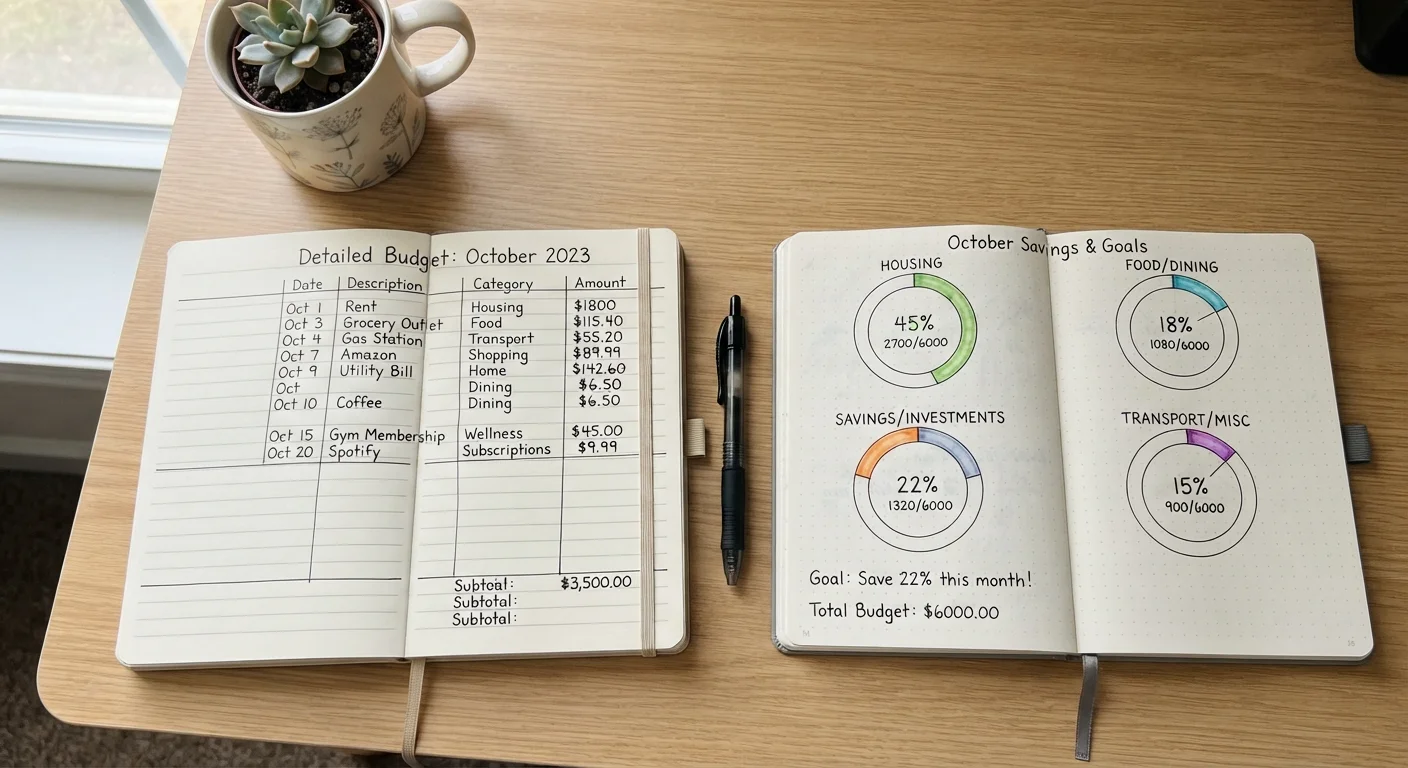
With zero-based budgeting (ZBB), you start every month with your total take-home income and allocate every dollar to a specific category — housing, groceries, transportation, savings, entertainment, and so on — until your income minus your allocations equals zero. The name refers to that end state: a budget that balances to zero, not an account with no money. Funds designated for savings or debt repayment count as allocated dollars just like any expense.
The 50/30/20 Rule
The 50/30/20 rule takes a broader approach. It divides after-tax income into three categories: roughly 50% toward needs (housing, utilities, groceries, minimum debt payments), 30% toward wants (dining out, subscriptions, hobbies), and 20% toward savings and debt repayment beyond minimums. The rule is intentionally flexible — the percentages are targets, not rigid requirements. Learn more about how the 50/30/20 rule works and where it falls short.
| Criterion | Zero-Based Budgeting | 50/30/20 Rule |
|---|---|---|
| Setup time | 30–60 min per month | Under 15 minutes |
| Category detail | Line-item, highly specific | Three broad buckets |
| Ongoing maintenance | Weekly check-ins recommended | Monthly review sufficient |
| Works with irregular income | Yes — rebuilt each month | Less easily — targets shift |
| Flexibility mid-month | Requires reallocation | Adjusts naturally within buckets |
| Best for tight margins | Yes — maximum control | Less so — categories can mask overspend |
| Beginner-friendly | Moderate learning curve | Very accessible |
Effort, Flexibility, and Who Each Method Suits
The most practical difference between these two frameworks is the ongoing time commitment they require.
Zero-based budgeting typically takes 30 to 60 minutes to set up at the start of each month and requires regular check-ins — weekly for most people — to track spending against allocations. It rewards detail-oriented individuals and those dealing with tight margins, as every category must be consciously funded. It also adapts well to irregular income: because you rebuild the budget each month from your actual earnings, a lower-income month simply means adjusting allocations rather than violating a percentage target.
The 50/30/20 rule, by contrast, can be set up in minutes. Once you know your take-home pay, the math is straightforward. Its weakness is the opposite side of its strength: broad categories can mask problem areas. Spending within the "wants" bucket may hide individual habits that are quietly working against your goals.
~78%
Americans living paycheck to paycheck at some point
Various surveys over recent years have consistently found a large share of U.S. households report difficulty covering expenses between pay periods, underscoring the value of structured budgeting.
20%
Income the 50/30/20 rule targets for savings and debt
The 20% savings-and-debt target is a guideline, not a guarantee — actual capacity varies significantly based on income level and cost of living.
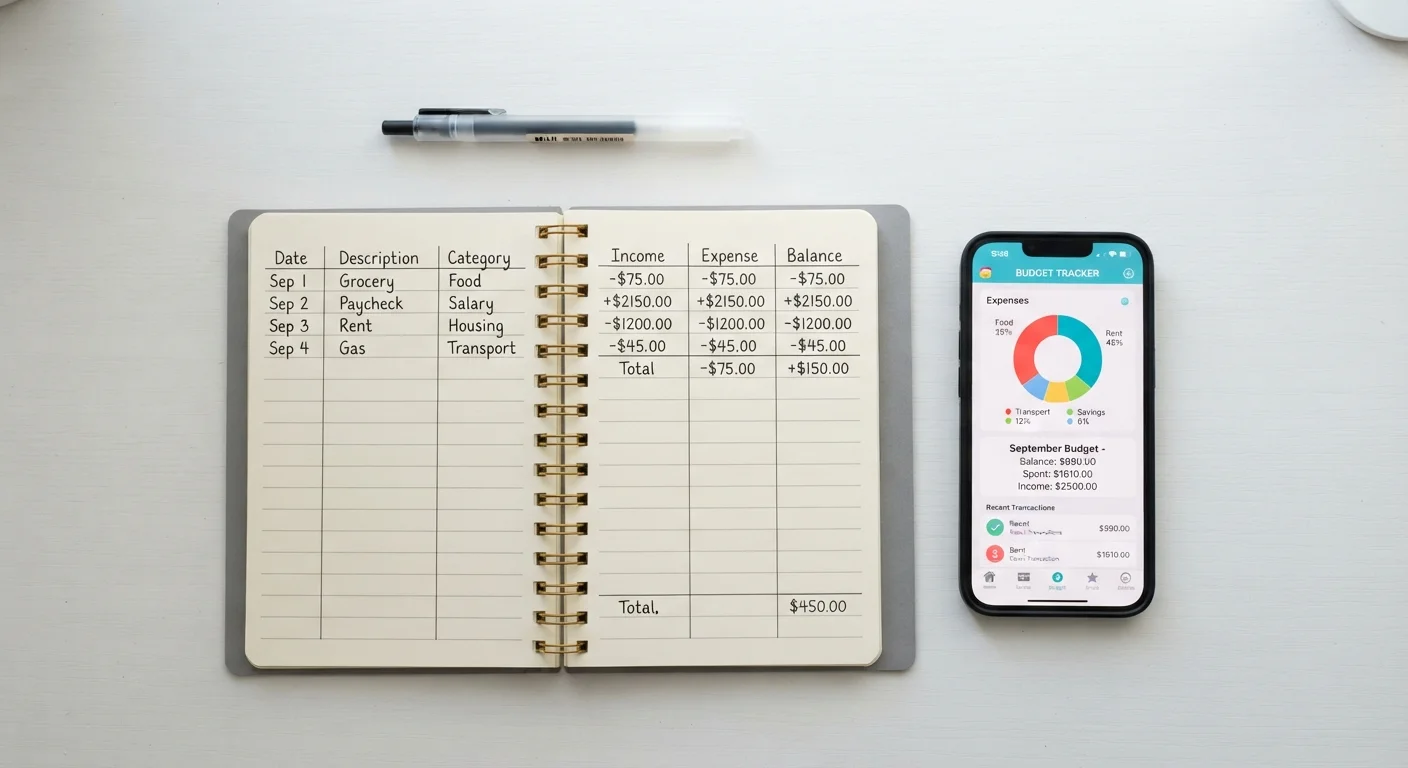
If you are deciding how to track whichever method you choose, comparing paper budgeting with app-based tools can help you find the right format for your routine.
Limitations Worth Understanding
Both frameworks carry real limitations that are worth acknowledging before committing to either.
Zero-based budgeting can create decision fatigue and, for some people, an overly rigid relationship with money. If life changes mid-month — an unexpected car repair, a medical bill — every category must be re-evaluated and reallocated. For households with multiple earners or complex finances, coordination adds another layer of work.
The 50/30/20 rule was designed around a median income profile and assumes that 50% of take-home pay is realistically enough to cover essential costs. In high-cost cities or for lower-income households, needs alone may exceed 50% of income, making the remaining targets difficult to hit. The rule also does not distinguish between high-interest debt repayment and long-term savings — both fall into the 20% bucket, which requires its own judgment call.
Neither Method Requires Perfection
Both zero-based budgeting and the 50/30/20 rule are tools, not tests. Missing a monthly target or needing to reallocate mid-month does not mean the method has failed. Consistency over time matters far more than precision in any single month. Many people find that starting with the 50/30/20 rule builds the habit, then graduating to zero-based budgeting adds the control they need as their goals evolve.
For a broader look at how these two methods compare alongside a third option, see the three-framework comparison including the envelope method.
This article is for general informational and educational purposes only and does not constitute personalized financial advice. Consider consulting a licensed financial professional regarding decisions specific to your situation.