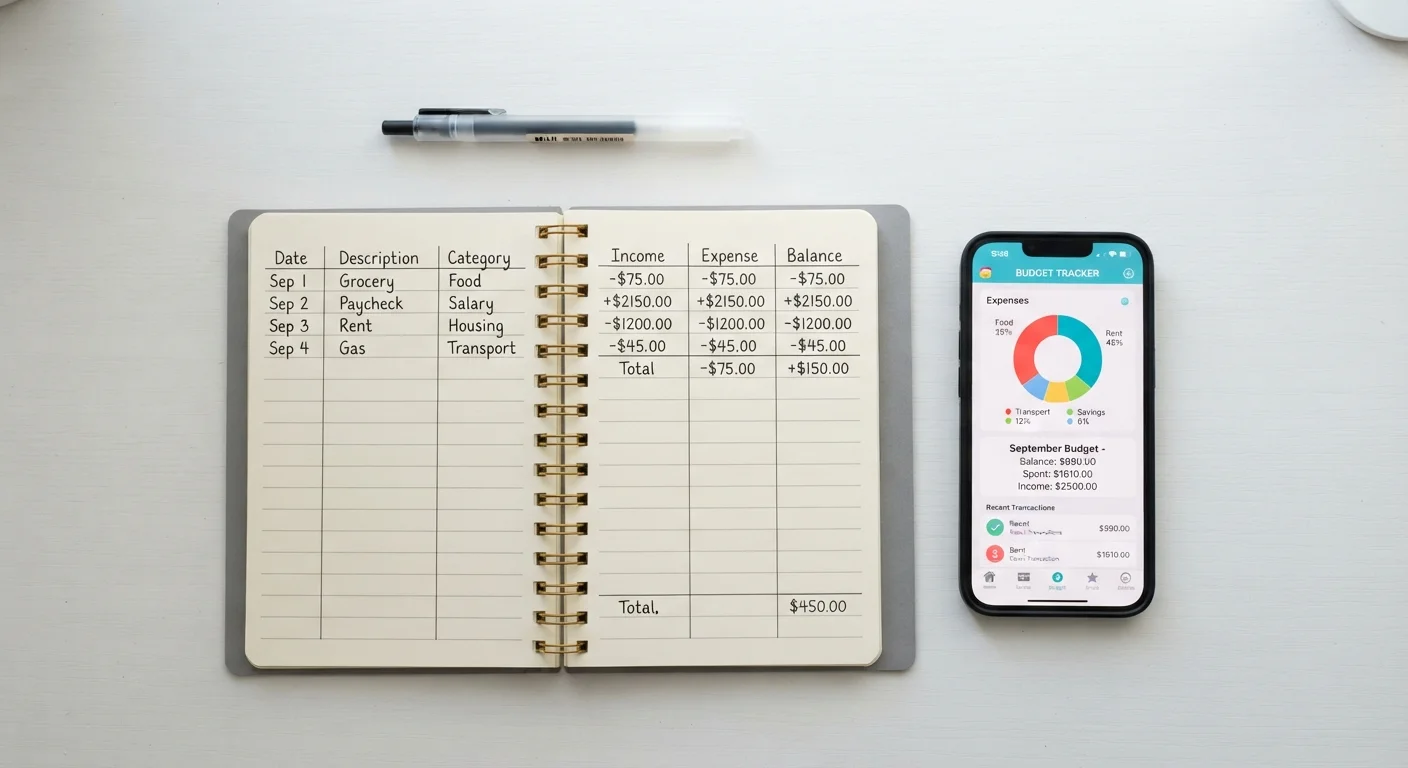
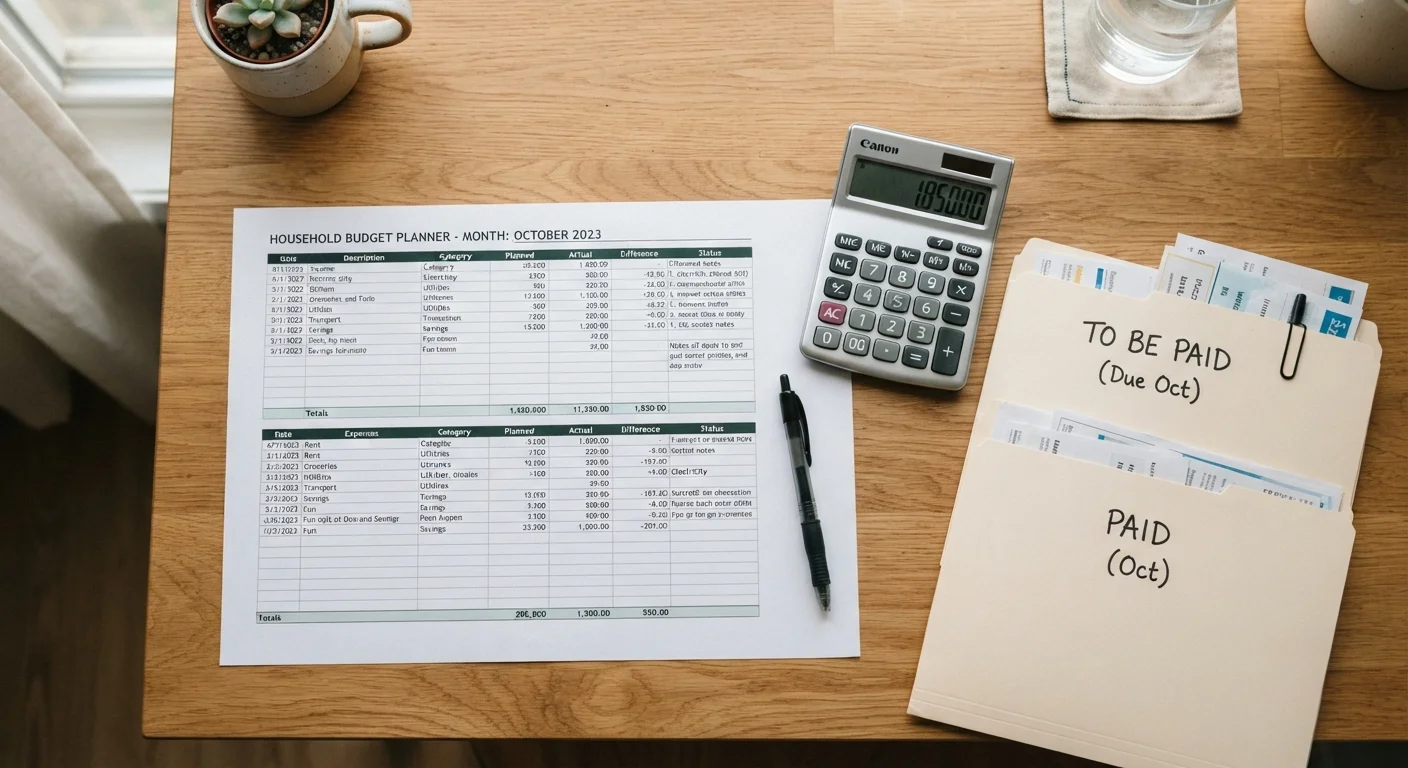
The Core Distinction — and Why It Matters
Every dollar you spend belongs to one of two categories: it either costs the same amount every time it comes due, or it doesn't. That single distinction — fixed versus variable — is the backbone of any honest budget.
Fixed expenses are predictable. You know exactly how much is leaving your account and when. Variable expenses require estimation, because the amount shifts depending on behavior, season, or circumstances. Neither type is inherently good or bad, but treating them the same way in a budget is a common mistake that leads to shortfalls.
If you're new to building a budget framework, the budgeting vocabulary every beginner should know is a useful starting reference before going deeper.
~33%
Average share of income spent on housing
The U.S. Bureau of Labor Statistics Consumer Expenditure Survey consistently finds housing is the largest single expense category for American households.
~$6,000
Average annual household food spending
BLS Consumer Expenditure data shows food as one of the most significant variable expense categories for U.S. households, with amounts varying widely by household size and location.
1 in 3
Americans with no monthly budget
Surveys by the National Foundation for Credit Counseling have found a significant portion of U.S. adults do not maintain a formal monthly budget, limiting their ability to track either fixed or variable costs.
Fixed Expenses: The Non-Negotiables
Fixed expenses typically represent your committed financial obligations — the bills you've agreed to pay in a set amount for a defined period. Common examples include:
- Rent or mortgage payments
- Auto loan or lease payments
- Health, auto, or renters insurance premiums
- Student loan installments
- Internet or phone plans at a flat monthly rate
Because these amounts don't change, they're the easiest to plug into a budget with confidence. The challenge is that lowering them usually requires a significant decision: renegotiating a lease, refinancing a loan, or changing coverage levels. That's why building savings and managing debt strategically often focuses first on fixed costs — reducing one can free up meaningful room every single month.
Review Fixed Expenses Annually
Even though fixed expenses don't change month to month, that doesn't mean they can't be changed. Set a calendar reminder once a year to review insurance premiums, subscription plans, and loan terms. Rates and circumstances shift, and a quick review can surface savings you'd otherwise miss.
Variable Expenses: Where Your Choices Live
Variable expenses reflect your day-to-day decisions and lifestyle. They include:
- Groceries and household supplies
- Gasoline and transportation costs
- Dining, entertainment, and personal care
- Clothing and miscellaneous shopping
- Utility bills (electricity, water) that shift seasonally
These costs give your budget its flexibility. When cash flow tightens in a given month, variable expenses are where most people find room to cut — spending less on dining out, delaying a purchase, or reducing discretionary outings. Over time, even small consistent reductions in variable spending compound into meaningful savings.
Be aware that some variable costs are still essential. Groceries vary in amount but are not optional. Budgeting for them with a realistic monthly range — rather than a single fixed number — prevents underestimating what you'll actually need.
Building a Budget That Accounts for Both
A functional budget starts by listing every fixed expense and totaling them. That sum is effectively your monthly floor — the minimum you must cover regardless of anything else. What remains from your take-home income after fixed expenses is available for variable spending, savings, and debt payoff.
From there, assign estimated ranges — not exact figures — to each variable expense category based on your recent spending history. Review bank and card statements from the past two or three months to ground those estimates in real data rather than optimistic guesses.
Don't overlook irregular expenses that fall outside the monthly rhythm — annual memberships, car registration, holiday gifts, or seasonal costs. Our guide to spending categories most budgets forget to include covers the costs that most frequently catch people off guard. Vehicle ownership in particular carries both fixed costs (insurance, loan payments) and variable ones (fuel, maintenance) — a fuller picture is available in understanding the real financial costs of owning a vehicle.
Once you have a clear map of fixed and variable costs, you're ready to apply a structured method. The zero-based budgeting vs. the 50/30/20 rule comparison can help you decide which framework fits your financial situation best.
“A budget is telling your money where to go instead of wondering where it went. The first step in that process is knowing which costs are decided for you and which are still in your hands.”
— Dave Ramsey, Personal finance author and radio host
This article is for general informational purposes only and does not constitute personalized financial advice. Consult a qualified financial professional regarding your specific circumstances.