How Each Approach Works
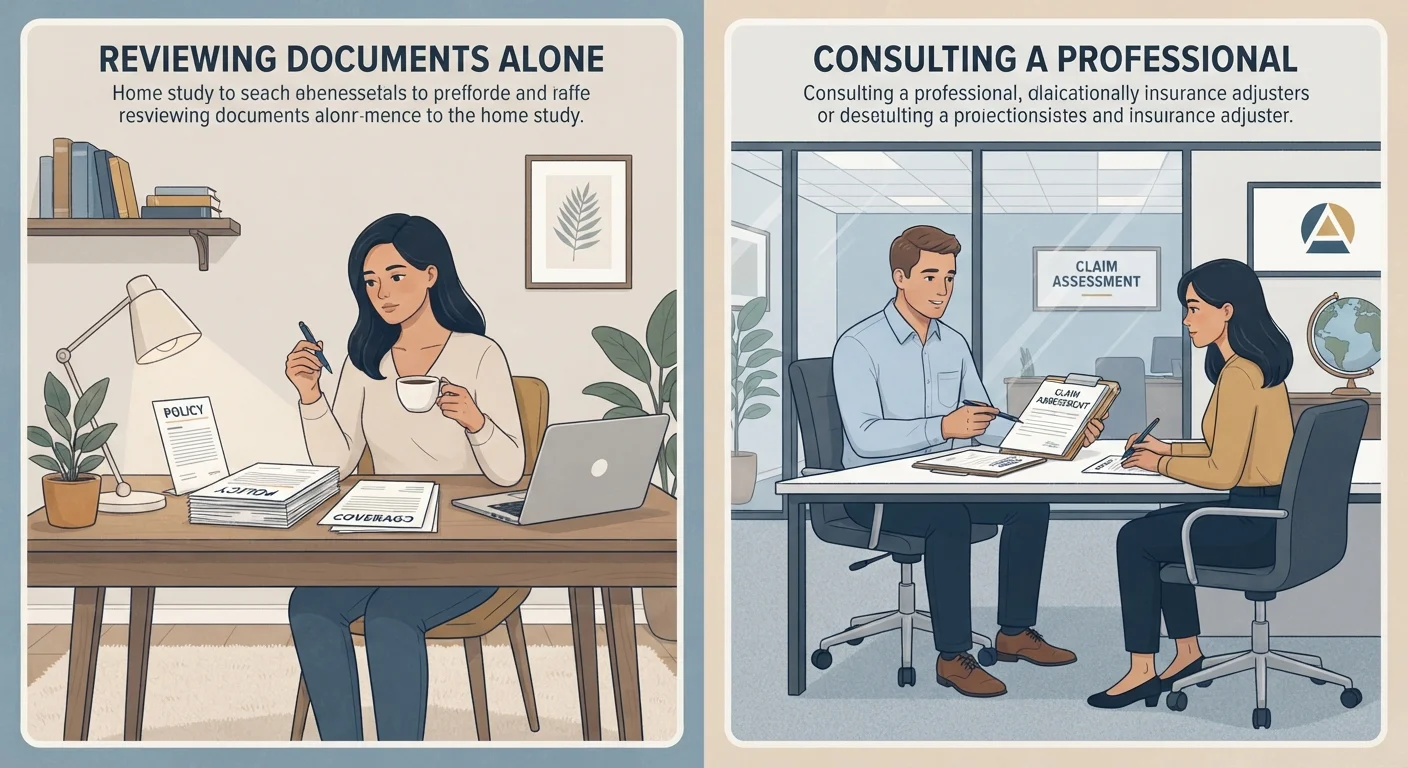
When you file a claim on your own, you contact your insurer directly, report the loss, and work with the company's assigned adjuster - an employee or contractor who represents the insurer's interests. Your job is to document the damage, submit supporting evidence, and negotiate toward a settlement you believe is fair. Our step-by-step claims walkthrough covers this process in detail if you're starting from scratch.
A public adjuster, by contrast, is a licensed professional you hire privately to manage the claim on your behalf. They assess the damage independently, interpret your policy's coverage language, prepare a detailed estimate, and negotiate directly with the insurer. Public adjusters are regulated by state departments of insurance and must be licensed in the state where your property is located. They do not work for your insurance company - that distinction matters.
Most public adjusters charge a contingency fee, typically ranging from 5% to 15% of the final settlement amount, though fee structures and caps vary by state. Some states limit the percentage a public adjuster may charge, especially on claims from declared disasters. Always ask for the fee agreement in writing before signing anything.
| Criterion | Filing Yourself | Hiring a Public Adjuster |
|---|---|---|
| Cost | No fee | 5%-15% of settlement (varies by state) |
| Who they represent | You (directly) | You (as your paid advocate) |
| Expertise required | Moderate - policy reading, documentation | Provided by the adjuster |
| Time commitment | High - you manage all steps | Lower - adjuster handles most legwork |
| Best claim size | Small to mid-size, straightforward | Large or complex losses |
| Negotiation leverage | Depends on your skill and evidence | Professional-level estimate and advocacy |
| Licensing requirement | None for the policyholder | Must be licensed by your state |
When Self-Filing Makes Sense
For many routine claims - a burst pipe, a minor roof leak, a car break-in - filing yourself is entirely manageable. The process is more straightforward than it can seem, especially if you've prepared in advance. Keeping organized records is the single biggest factor in a smooth self-filed claim; our documentation checklist can help you get ready before you ever need to call your insurer.
Self-filing works best when:
- The damage is visible and easy to photograph and describe.
- The loss amount is modest - well within your coverage limits with no grey areas.
- You have time to follow up, respond to requests, and review settlement offers.
- Your insurer is responsive and the claim moves forward without disputes.
One common concern is whether filing will raise your future premiums. That depends on several variables - not just the fact of a claim. See our article on what insurers weigh when adjusting premiums after a claim for a clearer picture.
5%-15%
Typical public adjuster contingency fee range
Fee structures and state-imposed caps vary; some states set lower maximums for disaster-related claims.
~1 in 20
Homeowners who file a property claim annually
According to the Insurance Information Institute, roughly 5% of insured homeowners file a claim in a given year.
When a Public Adjuster May Be Worth the Cost
Public adjusters tend to deliver the most value on large, complex, or disputed claims - situations where the difference between a low initial offer and a fair settlement can be substantial. Fire losses, flood damage, significant storm destruction, and business interruption claims often involve dozens of line items and coverage nuances that are easy to miss without training.
Consider hiring a public adjuster if:
- Your insurer's settlement offer seems significantly lower than your actual repair or replacement costs.
- The claim involves multiple coverage types or overlapping policies.
- The insurer has denied coverage for part of the loss and you believe the denial is wrong.
- You're dealing with a large commercial or residential property loss.
If a claim has already been denied, a public adjuster is one option - but a formal appeal is another. Our guide on appealing an insurance claim decision explains how to pursue that route. Understanding how insurers calculate claim payouts can also help you evaluate whether an offer is reasonable before you decide to negotiate.
Public Adjusters vs. Other Claims Professionals
Public adjusters are distinct from the insurance company's own adjusters (who work for the insurer) and from attorneys who specialize in insurance disputes. A public adjuster negotiates within the claims process; an attorney can litigate if a dispute escalates. For most claims, a public adjuster is the more practical and cost-effective intermediary - but if coverage has been flatly denied and you believe it's wrongful, an insurance attorney may be the more appropriate resource.
Key Risks to Watch on Both Paths
Self-filers face a real risk of leaving money on the table - not from any bad faith by the insurer, but simply from not knowing what to ask for. Depreciation schedules, code-upgrade costs, and additional living expense coverage are items policyholders commonly overlook. Avoiding missteps starts with knowing what can go wrong: common mistakes that weaken legitimate claims are more avoidable than most people think.
On the public adjuster side, the risks are different. Disreputable operators - sometimes called storm chasers - solicit homeowners aggressively after disasters and may pressure quick contract signings. Red flags include: no verifiable license, upfront fees before work is done, and guarantees of a specific settlement amount (which no one can legitimately promise). Verify any public adjuster's license at your state's department of insurance website before signing a contract.
Also worth knowing: hiring a public adjuster does not guarantee a higher settlement, and their fee comes out of whatever the insurer pays - reducing your net payout if the negotiated increase is modest. Weigh that math carefully for lower-value claims.
This article is for general informational purposes only and is not legal, financial, or insurance advice. Coverage terms, adjuster regulations, and fee limits vary by state and policy. Consult a licensed insurance professional or your state's department of insurance for guidance specific to your situation.