How Reference Pricing Actually Works
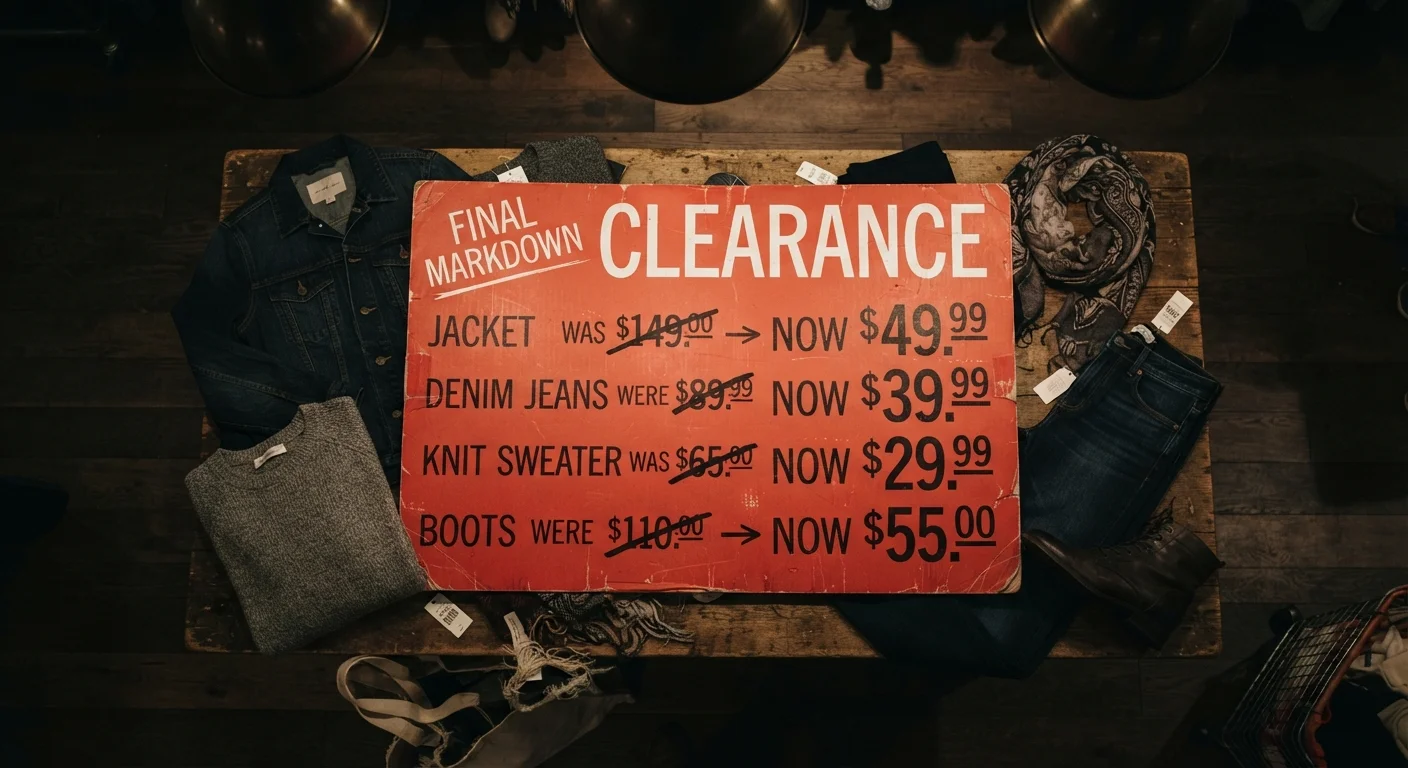
When a price tag shows a higher number crossed out above a lower sale price, that higher figure is called a reference price (sometimes a 'compare at' or 'was' price). Retailers set this number to establish an anchor-a figure that makes the current price feel like a bargain by comparison.
The reference price might represent the MSRP, a competitor's price, or a price the item was offered at briefly before being marked down. None of these are inherently fraudulent-but they aren't always reflective of what a typical buyer would have actually paid.
Reference Prices Are Not Always Real
A crossed-out 'original' price on a tag is a reference price, not a guaranteed reflection of what anyone ever paid. Retailers can set these prices, and while the FTC and many state attorneys general have pursued cases involving fictitious reference pricing, the standards shoppers can rely on vary widely. Never treat a percentage-off claim as proof of savings without checking the item's actual market price.
The Federal Trade Commission has published guidance noting that a reference price should reflect a genuine former price at which the item was offered for a reasonable period. Several state attorneys general have pursued retailers over fictitious reference pricing. But enforcement is inconsistent, and shoppers bear responsibility for evaluating the actual market price of an item they're considering.
Common Myths About Sale Prices-Corrected
Misunderstandings about what a sale price actually represents are widespread and often cost shoppers real money. The following paired comparisons address the most common ones directly.
Myth
If the tag shows a higher original price crossed out, I'm definitely saving that difference.
Fact
The crossed-out price is a reference price set by the retailer, not a verified record of what the item actually sold for.
Reference pricing-showing a higher 'was' price next to a lower 'now' price-is a legal and widespread retail technique. The crossed-out figure can represent an original retail price, a manufacturer's suggested retail price (MSRP), or a price the item was offered at for only a brief period. In some cases, it reflects a price the item rarely or never sold at in quantity. The apparent savings is calculated against that reference number, which may not reflect market reality. Before trusting the markdown, check what the item currently costs at other retailers or what its recent price history looks like using a price-tracking tool.
Myth
A bigger discount percentage always means a better deal.
Fact
Discount percentage is only meaningful relative to a valid baseline price. A 60% off claim means nothing if the starting price was inflated.
Percentage markdowns are calculated from whatever reference price the retailer chooses to display. An item priced at $50 with a 50% discount appears to cost $25-but if the same item retails elsewhere for $28 at full price, the 'deal' is marginal at best. The percentage figure tells you about the arithmetic of the markdown, not the actual value of the purchase. Anchor your evaluation to current market prices, not to the reference price chosen by the seller.
Myth
Sale events like holiday weekends always offer the lowest prices of the year.
Fact
Promotional sale events often feature selective markdowns, and some items carry prices no lower than during non-sale periods.
Major sale events are heavily marketed, and many shoppers assume every item is at its deepest discount. Research into pricing data from several major retailers has found that a meaningful share of items promoted during high-profile sale events are not at their historic low price during the event itself. Some items are discounted substantially; others are included in promotional materials at prices close to their everyday price. The practical approach: identify specific items you want before a sale event and track their recent price history so you can recognize a genuine dip.
Myth
If a store has a 'lowest price guarantee,' the sale price is automatically validated.
Fact
Price-match and lowest-price guarantees contain significant exclusions that limit their practical usefulness in many situations.
Guarantee policies are marketing tools as much as consumer protections. Most exclude marketplace sellers, limited-time flash sales, membership-gated prices, bundle deals, and competitors outside a defined list. The item being compared often needs to be identical down to the model number and color variant. Understanding how these policies actually work before relying on them is essential-what reads like a guarantee often applies in a much narrower set of circumstances than shoppers expect.
Myth
Online sale prices are always lower than in-store prices for the same retailer.
Fact
Many retailers practice dynamic or channel-differentiated pricing, meaning online and in-store prices for the same item can differ-in either direction.
Retailers increasingly use dynamic pricing algorithms that adjust prices based on demand, browsing behavior, inventory, and competitive data. This means the price you see online may differ from what's on the shelf at a physical location, and can also vary between users based on browsing history or geography. Never assume one channel is automatically cheaper. If a purchase matters to your budget, check both channels at the time of purchase. Unit pricing on shelf tags can also reveal per-unit cost differences that headline prices obscure.
Practical Tools for Evaluating a Markdown Honestly
The most reliable check on any sale claim is price history data. Browser extensions and dedicated price-tracking services log historical pricing for many online retailers, making it straightforward to see whether a 'sale' price is genuinely lower than what the item has cost over recent months.
Urgency Language Signals Pressure, Not Value
Phrases like 'today only,' 'while supplies last,' or countdown timers are designed to short-circuit price evaluation. Urgency cues encourage spending before comparison shopping can happen. Treat any time-pressured framing as a reason to pause, not to act faster. A genuinely good price will still be a good price after you've taken five minutes to check comparable options.
For in-store purchases, a quick search on a phone before committing is a reasonable step for any purchase of consequence. Unit pricing-the per-ounce or per-count figure on shelf tags-offers a parallel sanity check at the grocery or household goods level, cutting through package-size manipulation to show the true cost of what you're buying.
The core discipline is simple: evaluate the current sale price against current market prices, not against the reference price the retailer chose to display. That shift in framing removes the psychological anchor and lets you assess value directly.
~40%
Items not at historic lows during major sale events
Consumer advocacy research and price-tracking analyses have consistently found that a significant share of 'sale' items during major promotional events carry prices at or near their normal non-sale level.
MSRP
Common reference price baseline retailers use
Manufacturer's Suggested Retail Price is frequently used as a reference point for discounts, even when items rarely or never sold at that price in the marketplace.