
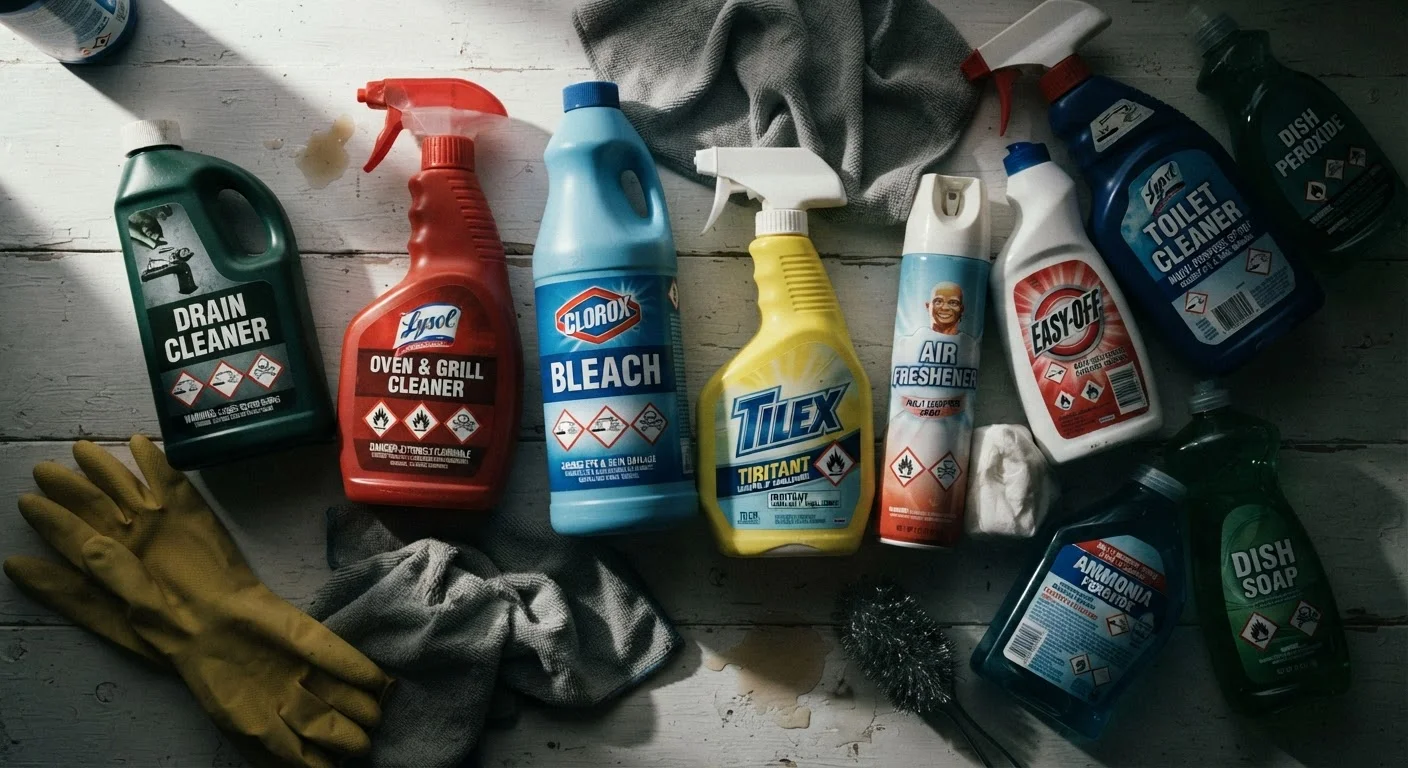
Why Mixing Cleaners Can Be Dangerous
Most households contain a surprisingly large number of cleaning chemicals - bleach, ammonia-based glass cleaners, acidic descalers, hydrogen peroxide, and more. When used as directed and stored separately, these products are generally safe. The hazard emerges when two chemically incompatible products are mixed, accidentally or intentionally, producing toxic byproducts that can irritate or damage the respiratory system, eyes, and skin.
This is not a fringe concern. Poison control centers across the U.S. routinely handle cases of unintentional exposure from mixed household chemicals. The chemistry involved is straightforward - and understanding it helps you make safer decisions at home without having to memorize every label.
| U.S. Poison Control Number | 1-800-222-1222 (American Association of Poison Control Centers) |
| Most reported household chemical exposure | Bleach-related incidents (CDC, Morbidity and Mortality Weekly Report) |
| Primary risk environment | Small, poorly ventilated spaces (bathrooms, kitchens) |
| Key safety rule | Never mix products unless the label explicitly permits it |
| Storage guidance | Keep cleaning products in original containers with caps secured (Consumer Product Safety Commission general guidance) |
If you share your home with pets, it's worth noting that chemical fumes can affect animals faster than adults. See our companion article on everyday kitchen hazards for pets for a broader picture of household risks to dogs and cats.
The Combinations You Must Avoid
These are the most commonly encountered - and most hazardous - cleaning product combinations found in American homes.
Chloramine
A class of chemical compounds formed when bleach reacts with ammonia. Chloramines are volatile gases that irritate the respiratory tract and can cause serious lung damage at elevated concentrations.
Chlorine gas
A toxic gas produced when bleach is combined with acids such as vinegar. Even at low concentrations it irritates the eyes, nose, throat, and lungs.
Peracetic acid
A corrosive compound formed when hydrogen peroxide and acetic acid (vinegar) mix. It can damage skin, eyes, and airways on contact.
Volatile organic compound (VOC)
A carbon-based chemical that readily evaporates at room temperature. Many cleaning product reactions release VOCs that become airborne and are inhaled before a person is aware of exposure.
Bleach + Ammonia
Many multi-surface sprays and glass cleaners contain ammonia. Combined with chlorine bleach, they react to form chloramines - volatile compounds that cause coughing, shortness of breath, chest pain, and, at high concentrations, fluid in the lungs. This reaction can happen in a poorly ventilated space even if you use the products sequentially rather than simultaneously.
Bleach + Acidic Cleaners
Vinegar, many bathroom descalers, and some tile cleaners are acidic. When mixed with bleach, they release chlorine gas - a severely irritating substance that affects the eyes, throat, and lungs. Even diluted bleach combined with undiluted vinegar can produce a measurable concentration of chlorine gas in an enclosed bathroom.
Bleach + Rubbing Alcohol
This combination produces chloroform and other chlorinated compounds. While the concentrations produced at home are unlikely to reach anesthetic levels, the fumes are toxic and should be avoided entirely.
Hydrogen Peroxide + Vinegar
Used sequentially on the same surface (a popular DIY disinfecting tip), these two products form peracetic acid, which is corrosive to skin, eyes, and airways. Using them separately on different occasions is generally considered safe; combining them in the same container or applying one immediately after the other on an unwashed surface is not.
Different Drain Cleaners
Drain cleaning products may be acid-based or alkaline-based. Mixing two different drain cleaners - or using one after the other without thoroughly flushing - can cause violent chemical reactions, including spattering of caustic liquid. Always flush completely with water before switching products, and consult a licensed plumber if a drain remains blocked after a single treatment attempt.
For households that rely on professional cleaning services, asking the right questions before you hire can help ensure they follow safe chemical handling practices in your home.
Ventilation Is Always Your First Defense
Regardless of which products you use, always clean in a well-ventilated space - open windows and run exhaust fans. If fumes become noticeable, leave the area immediately, get fresh air, and allow the space to ventilate fully before re-entering. Symptoms such as coughing, eye irritation, or dizziness after cleaning warrant medical attention.
This article is for general informational purposes only and does not constitute professional safety, medical, or chemical handling advice. If you or someone in your household experiences symptoms after chemical exposure, contact Poison Control (1-800-222-1222 in the U.S.) or emergency services immediately.