
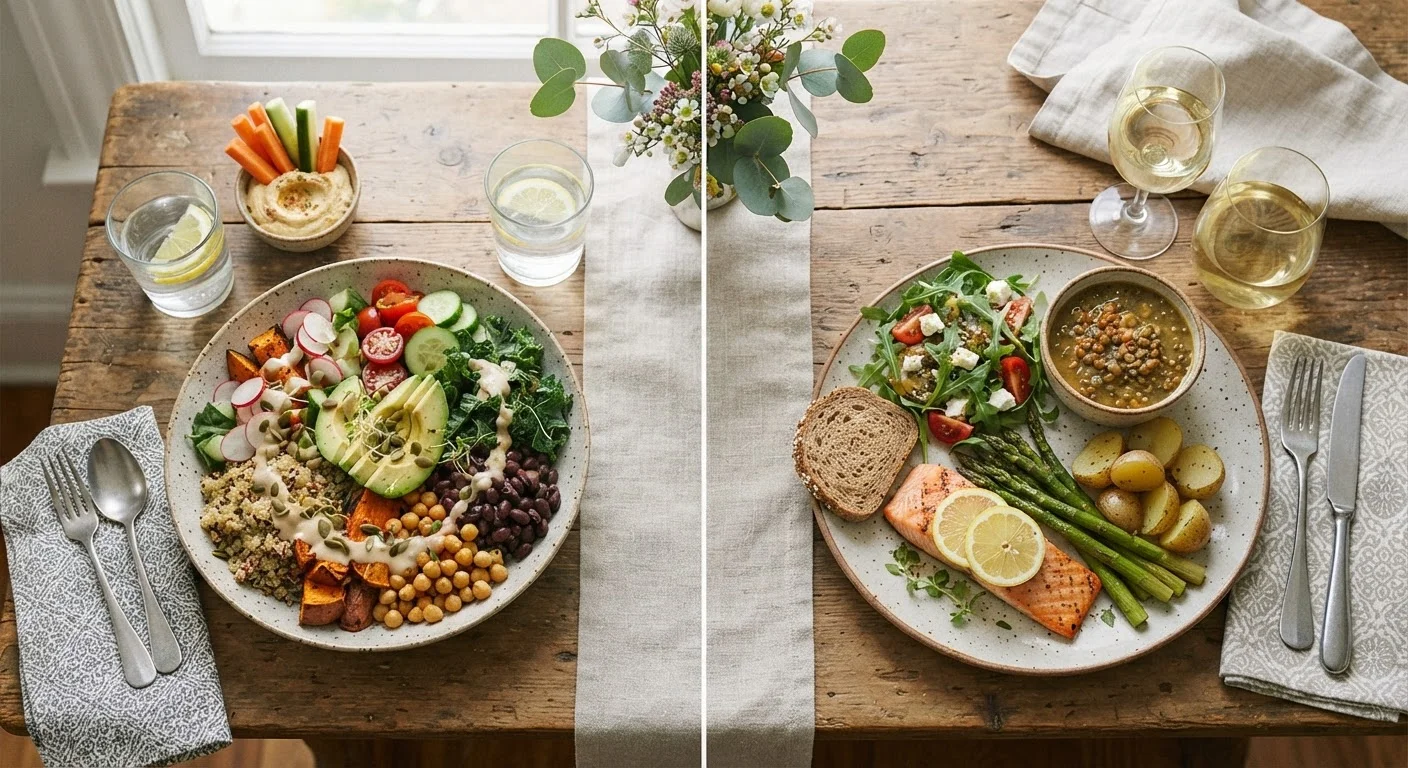
What Each Eating Pattern Actually Means
The term plant-based diet covers a broad spectrum - from fully vegan (no animal products at all) to flexitarian (predominantly plants, with occasional animal foods). What unites them is a dietary center of gravity around vegetables, fruits, legumes, whole grains, nuts, and seeds.
An omnivorous diet, by contrast, draws from both plant and animal kingdoms - meat, poultry, seafood, dairy, and eggs alongside plant foods. Most Americans currently eat this way, though the quality and composition vary enormously.
It's worth noting that neither label is monolithic. A heavily processed plant-based diet is nutritionally very different from a whole-foods plant-based one. Similarly, an omnivorous diet rich in vegetables and lean proteins looks nothing like one dominated by processed meats and refined grains. The pattern matters - but so does the quality within that pattern.
Nutritional Strengths and Gaps
Research consistently shows that well-planned plant-based diets are associated with lower rates of type 2 diabetes, hypertension, and certain cardiovascular risk factors. They tend to be higher in fiber, antioxidants, and phytonutrients. However, they require deliberate attention to several nutrients that are sparse or absent in plant foods:
- Vitamin B12 - found almost exclusively in animal products; supplementation is generally necessary for vegans.
- Iron and zinc - present in plants but in forms with lower bioavailability than animal sources.
- Omega-3 fatty acids (EPA and DHA) - algae-based supplements can fill this gap for those avoiding fish.
- Calcium and Vitamin D - achievable through fortified foods and sunlight, but worth monitoring.
Omnivorous diets naturally provide these nutrients with less planning effort, and animal proteins supply all essential amino acids in a single source. The trade-off is that higher consumption of red and processed meats is linked - in large observational studies - with increased risk of colorectal cancer and cardiovascular disease. The type and quantity of animal products consumed makes a significant difference.
For a deeper look at how protein stacks up across both patterns, see our guide to protein sources across eating styles.
| Plant-Based Diet | Omnivorous Diet | |
|---|---|---|
| Protein completeness | Requires combining sources or planning | Easily met through animal products |
| Vitamin B12 | Supplementation typically needed | Readily available from food |
| Fiber intake | Generally higher | Varies widely by food choices |
| Environmental impact | Lower greenhouse gas footprint | Higher, especially with red meat |
| Social flexibility | Requires more planning in most US contexts | Easier in mainstream dining settings |
| Cost (whole foods focus) | Often lower with staple plant foods | Variable; meat can raise food costs |
| Cardiovascular risk markers | Associated with lower LDL cholesterol | Depends heavily on food quality chosen |
Sustainability and Practical Considerations
From an environmental standpoint, plant-based diets generally carry a lower carbon footprint, use less land and water, and generate less greenhouse gas than diets high in animal products - particularly ruminant meats like beef and lamb. This is a well-supported finding across lifecycle assessment research, though the specifics vary by region, farming practice, and food system.
Practically, omnivorous eating remains easier to navigate in most American social contexts - restaurants, family gatherings, and travel all offer more default options. Plant-based eaters may need to plan ahead more carefully, particularly when eating out or in food-insecure environments where variety is limited.
Start with Addition, Not Elimination
If you're curious about eating more plants, a useful first step is adding more whole plant foods to meals you already enjoy - rather than removing foods cold turkey. Swapping one or two weekly meals to legume- or vegetable-centered dishes is a low-pressure way to explore what works for your palate and routine. Small, consistent shifts tend to stick better than dramatic overhauls.
Cost is another variable. Whole plant foods like dried legumes, oats, and seasonal vegetables are among the most affordable foods available. However, highly processed plant-based alternatives (meat substitutes, specialty dairy-free products) can be expensive. A budget-conscious plant-forward diet is entirely feasible; it just requires some cooking familiarity.
Building consistent habits matters more than any single dietary label. Our article on habits that support long-term nutrition explores how to make any eating pattern stick.
Finding Your Own Balance
The evidence doesn't demand that you choose a strict camp. Many nutrition researchers and registered dietitians emphasize a predominantly plant-forward approach - one that makes whole plant foods the foundation while allowing flexibility with animal products based on preference, culture, and health needs. This mirrors patterns like the Mediterranean diet, which has a strong evidence base and doesn't require eliminating any food group entirely.
If you're considering a significant dietary shift - particularly if you have an existing health condition, are pregnant, or are making changes for a child - it's important to work with a registered dietitian or your healthcare provider. Individual needs, lab values, and lifestyle factors all shape what a balanced diet looks like for you specifically.
For a practical framework to apply at any meal, see Building a Balanced Plate.
This article is for general informational and educational purposes only and does not constitute medical or dietary advice. Please consult a qualified healthcare professional or registered dietitian before making significant changes to your diet.