
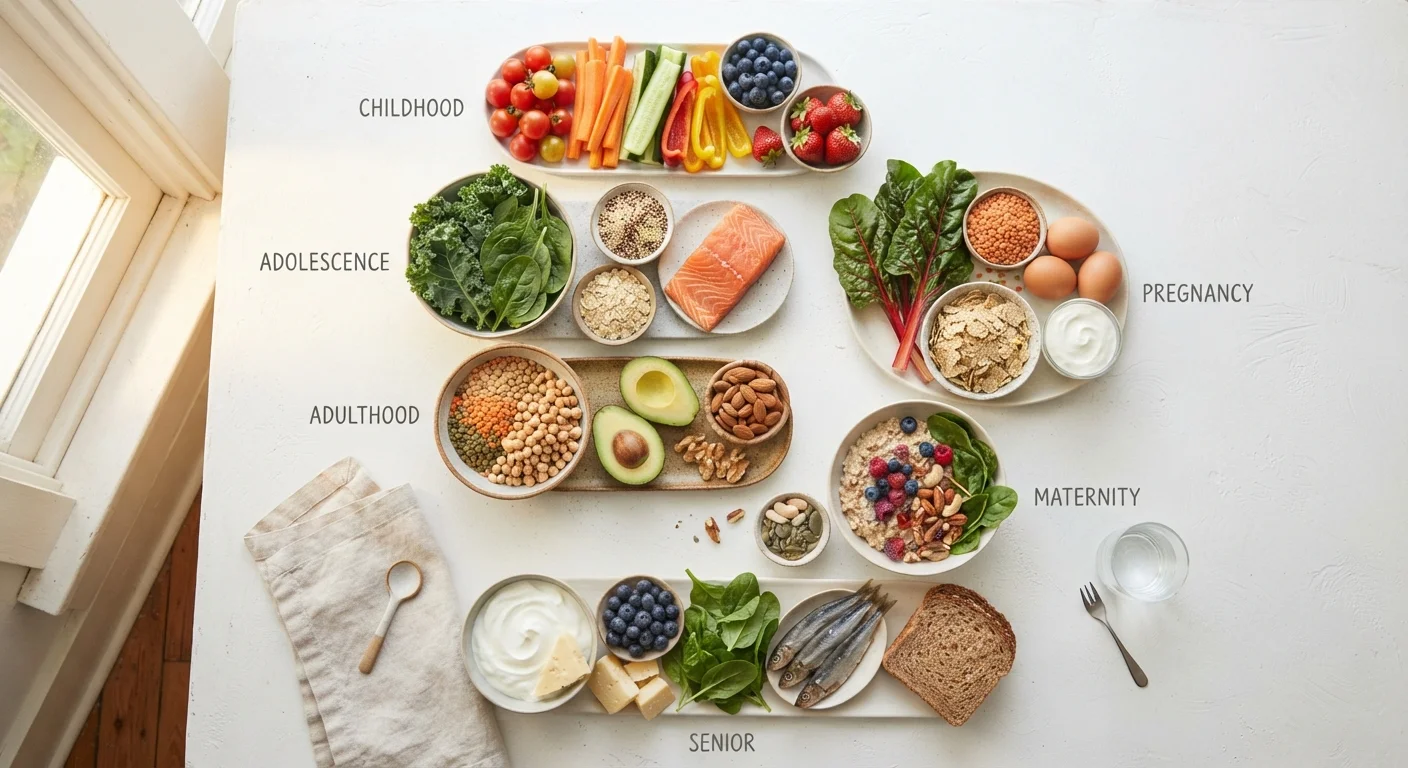
Why Nutritional Needs Change Over Time
The human body is not static. From cellular turnover to hormonal shifts, the biological landscape changes meaningfully between your 20s and your 70s - and the nutrients that support it need to change accordingly. Understanding this isn't about following a rigid plan; it's about making informed choices that match where your body actually is.
Several key drivers explain why needs shift: metabolic rate tends to slow gradually with age, lean muscle mass typically declines without deliberate effort to maintain it, and the gut's ability to absorb certain nutrients - including vitamin B12 and calcium - can become less efficient over time. Hormonal changes, particularly around menopause, further alter how the body processes and stores nutrients.
This article is general health information, not personalized dietary advice. For guidance tailored to your specific health status, always consult a registered dietitian or your healthcare provider.
~1%
Annual muscle loss after age 30 without intervention
Research published in journals of gerontology estimates adults lose roughly 1% of muscle mass per year beginning in their 30s, accelerating after 60.
40-50%
Adults not meeting recommended calcium intake
U.S. dietary surveys consistently show a significant portion of adults fall short of recommended calcium levels, particularly women over 50.
~20%
Decline in resting metabolic rate from 20s to 60s
Studies on aging and metabolism estimate resting energy expenditure declines meaningfully over four decades, partly due to muscle mass reduction.
Young Adulthood (20s-30s): Building a Strong Foundation
The 20s and 30s are often the years when nutritional habits get established - for better or worse. Bone density peaks around age 30, making adequate calcium and vitamin D intake during this window genuinely consequential for long-term skeletal health. Iron is another key focus, particularly for women of reproductive age, where deficiency remains one of the most common nutritional shortfalls.
Energy needs tend to be higher in this stage, supporting an active lifestyle, but caloric quality matters as much as quantity. A pattern built around whole grains, lean proteins, legumes, fruits, and vegetables - rather than highly processed convenience foods - creates a nutritional template that's far easier to maintain as life gets busier.
Establish a protein-anchored meal pattern in your 20s and 30s - it's far easier to maintain muscle mass than to rebuild it later. Aim for a quality protein source at each meal as a simple organizing habit.
Early dietary patterns create metabolic and behavioral defaults that persist across decades, making the 20s and 30s a high-leverage window for nutritional investment.
In midlife, don't reduce food volume indiscriminately - reduce caloric density instead. Swapping refined grains for vegetables and legumes keeps meals satisfying while improving nutrient density.
Volume eating strategies help manage satiety as metabolism slows, preventing the feeling of deprivation that drives abandonment of healthier habits.
See our practical guide to building a balanced plate for a straightforward framework you can apply without counting calories.
Midlife (40s-50s): Adapting to a Shifting Metabolism
By the 40s, most people notice that what worked before may no longer produce the same results. Basal metabolic rate begins declining more noticeably, and without adjustments, a calorie surplus can accumulate gradually. This doesn't mean dramatic restriction - it means recalibrating portions and prioritizing foods that deliver more nutrition per calorie.
Fiber deserves special attention here. It supports digestive health, helps manage blood glucose levels, and contributes to cardiovascular health - all areas that become more relevant in midlife. Legumes, oats, vegetables, and fruits are practical, accessible sources.
For women, the perimenopause and menopause transition brings significant hormonal changes that affect bone density, cholesterol profiles, and weight distribution. Calcium and vitamin D remain important, and some evidence suggests adequate magnesium intake supports bone health as well. Men in this stage should pay attention to cardiovascular risk factors, where dietary patterns - particularly saturated fat and sodium intake - play a measurable role.
Prioritize Fiber in Your 40s
Most American adults consume roughly half the recommended daily fiber. In midlife, incrementally increasing fiber from whole food sources - rather than supplements alone - supports digestive health, blood sugar regulation, and cardiovascular risk factors. Adding one extra serving of vegetables or legumes per day is a realistic starting point.
For more on how consistent habits compound over time, our article on eating well on a consistent basis explores evidence-informed routines that hold up across life stages.
Older Adulthood (60s and Beyond): Protecting What Matters Most
Sarcopenia - the gradual loss of muscle mass and strength that accelerates after age 60 - is one of the most significant nutritional challenges of older adulthood. Research consistently indicates that higher protein intake, spread across meals rather than concentrated in one sitting, supports muscle maintenance alongside resistance-based physical activity. Older adults generally benefit from more protein per pound of body weight than younger adults, though individual needs vary.
Calorie needs often decrease in this stage, which creates a genuine challenge: eating less while getting enough of every essential nutrient. Nutrient-dense choices - eggs, fish, legumes, leafy greens, fortified foods - become even more critical. Vitamin B12 absorption can decline due to reduced stomach acid production, making it one of the nutrients most commonly recommended for supplementation in older adults, though any supplement decisions should involve a healthcare provider.
Thirst Signals Decline With Age
Older adults are at heightened risk of underhydration because the physiological thirst mechanism becomes less reliable over time. Mild chronic dehydration can impair cognitive function, kidney health, and nutrient absorption. Building scheduled fluid intake habits - rather than relying on thirst - is an important protective strategy. Speak with your healthcare provider if you have conditions that affect fluid balance.
Hydration is frequently underestimated in this stage. The sense of thirst naturally diminishes with age, yet water is integral to how the body uses the food you eat. Our guide on hydration and nutrition explains the connection in detail.
“The goal of nutrition in older age is not eating less - it's eating smarter. Protein, micronutrient density, and hydration deserve far more attention than calorie restriction alone.”
— Dr. Connie Bales, Professor of Medicine and nutrition researcher specializing in aging and sarcopenia
Habits That Serve You Across Every Stage
No single dietary pattern works for everyone, but certain principles hold across the entire adult lifespan. Variety remains the most reliable way to cover nutritional bases without obsessing over individual nutrients. Eating mostly whole, minimally processed foods - with flexibility for enjoyment - tends to outperform rigid rules that few people sustain long term.
Regular meals and mindful eating help regulate appetite signals, which become subtler with age. Cooking at home more often, reading labels when buying packaged foods, and staying connected to how food makes you feel are practical anchors that don't require expertise to apply.
Nutrition across the life stages isn't about perfection - it's about building patterns resilient enough to adapt as your needs evolve. Small, consistent adjustments compound meaningfully over decades.
This article is for general informational purposes only and does not constitute medical or dietary advice. Nutritional needs vary between individuals. Please consult a registered dietitian or qualified healthcare professional for guidance specific to your health circumstances.