What Earnest Money Actually Does
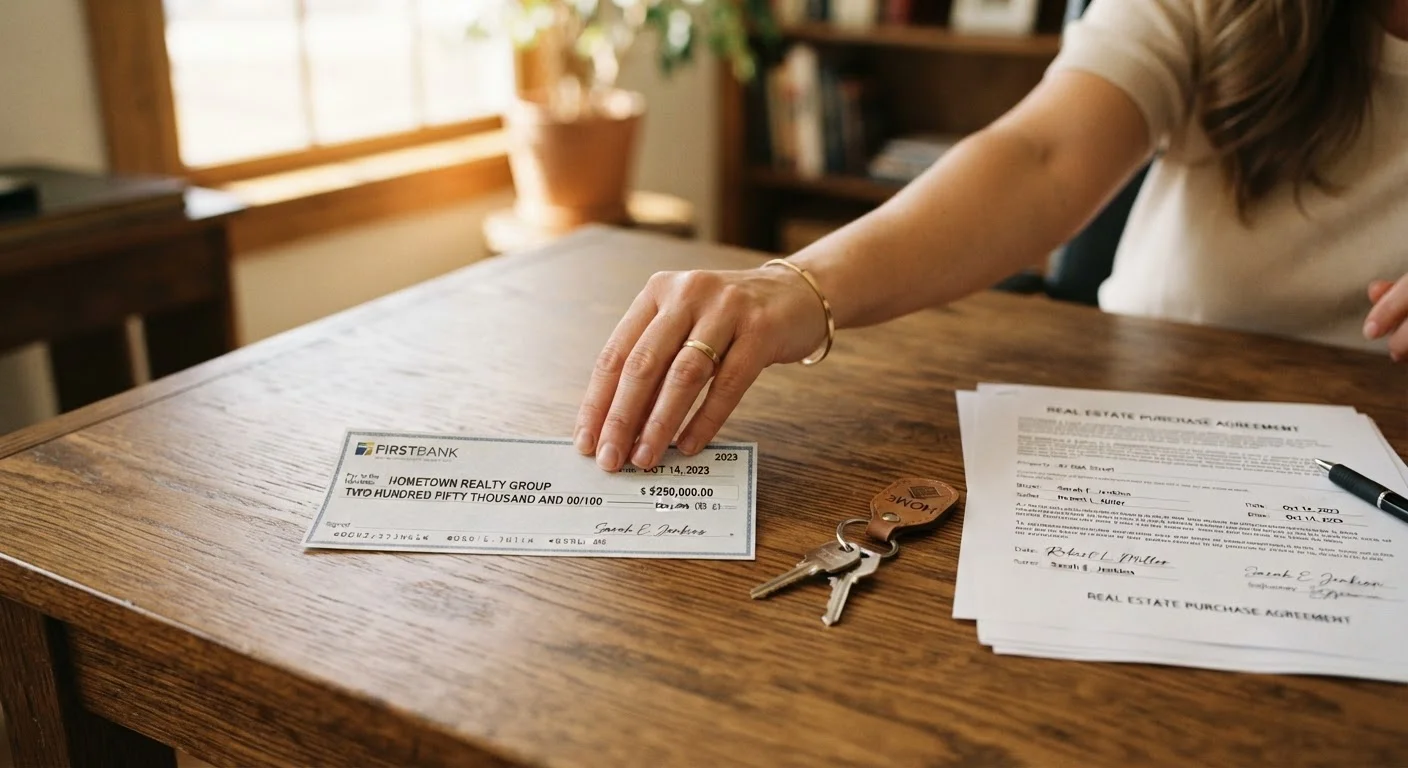
When a seller accepts your offer, the transaction isn't legally complete yet — inspections, appraisals, and financing approvals all lie ahead. Earnest money fills the gap. By depositing funds into escrow shortly after offer acceptance, you demonstrate that you're serious enough to put real money behind your intent.
From the seller's perspective, earnest money compensates for a critical risk: once they accept an offer, they typically stop showing the home and decline other offers. If a buyer walks away without consequence, the seller loses time and potentially other buyers. Earnest money creates a financial stake that discourages casual or non-committed offers.
For buyers, the deposit isn't lost money — it's applied toward your down payment or closing costs at settlement, assuming the deal closes as planned.
1%–3%
Typical earnest money range as a share of purchase price
This range reflects common U.S. market practice, though amounts vary significantly by region and market competitiveness.
30–60 days
Typical escrow period during which deposit is held
Most residential transactions take 30 to 60 days from accepted offer to closing, during which earnest money sits in escrow.
3
Core contingency types that protect buyer deposits
Inspection, financing, and appraisal contingencies are the most common contractual protections available to homebuyers.
How Much Is Expected — and Who Decides
No federal rule dictates a specific earnest money amount. In practice, deposits typically fall between 1% and 3% of the purchase price, though this varies by local market norms, competition level, and negotiation. On a $400,000 home, that translates to $4,000–$12,000.
In highly competitive markets, buyers sometimes voluntarily offer higher deposits to make their offers more attractive. A larger deposit signals stronger commitment. However, more money at risk also means more exposure if something goes wrong — so buyers should balance competitiveness with caution.
Verify Who Holds Your Escrow Funds
Before submitting your earnest money, confirm that the escrow holder is a licensed, neutral third party — such as a title company or attorney's office. Avoid sending funds directly to a seller or an unknown party. Verify wiring instructions independently through a trusted contact to guard against wire fraud, which targets real estate transactions.
The amount, timing of deposit, and escrow holder are all terms spelled out in your purchase contract. Your real estate agent can advise on local norms, but the final figure is always negotiable.
When You Get It Back — and When You Don't
This is where many buyers are surprised. Whether your earnest money is refundable depends almost entirely on the contingencies written into your purchase contract. Contingencies are conditions that must be met for the sale to proceed — and they are your primary financial protection. Learn what each contingency protects before agreeing to waive any of them.
- Inspection contingency: If a home inspection reveals significant issues and you choose to exit, you can typically recover your deposit.
- Financing contingency: If your mortgage application is denied despite good-faith efforts, this contingency generally allows you to exit with your deposit intact.
- Appraisal contingency: If the home appraises below the purchase price and you can't renegotiate terms, this contingency protects your deposit.
Waiving contingencies — sometimes done in competitive markets to make an offer more attractive — removes those protections. Understand what commonly derails deals after acceptance so you can assess your real risk before waiving anything.
If you back out for a reason not covered by a contingency — say, simply changing your mind — the seller can usually claim your earnest money as liquidated damages.
Contingency Deadlines Are Non-Negotiable
Most purchase contracts set firm deadlines for exercising contingencies. If you miss the inspection contingency window, for example, you may lose that protection even if serious defects are later discovered. Track all deadlines carefully and communicate promptly with your agent and lender to avoid unintentional waivers.
Disputes, Delays, and What to Expect If Things Go Wrong
Even when a buyer has a valid reason to exit, releasing earnest money isn't always automatic. Both parties must typically agree in writing to release the funds, or a dispute resolution process — sometimes including arbitration or court — plays out. This can take weeks or longer.
State laws heavily influence the outcome. Some states have specific statutes governing how quickly escrow agents must act on mutual release instructions; others leave more to contract terms. Working with an experienced real estate attorney or agent familiar with local practice is important if a dispute arises.
To reduce risk from the start: read your contract carefully, confirm your contingency deadlines, and never assume verbal assurances override written terms. The purchase contract governs everything. Common real estate myths often obscure how binding these documents actually are.
This article is for general informational purposes only and does not constitute legal, financial, or real estate advice. Consult a licensed real estate professional or attorney for guidance specific to your situation and jurisdiction.