Why the Inspection Report Isn't the End of the Deal
A home inspection report landing in your inbox can feel alarming — pages of findings, photographs of dark crawl spaces, circled deficiencies, and language like "recommend immediate repair." But experienced buyers and agents know that almost every home, including new construction, generates a list. The real skill is knowing which items demand action, which open a negotiation, and which are simply noise.
The inspection contingency is your most important tool here. It gives you the right to review findings and, depending on what you discover, request repairs, seek a price adjustment, ask for a seller credit at closing, or walk away without losing your earnest money. Understanding what each common red flag actually means — in practical, financial terms — puts you in a far stronger position at the table. See our guide to purchase contract contingencies for a full breakdown of how these protections work.
Foundation Cracks and Structural Movement
Horizontal cracks in basement walls, stair-step cracking in brick, or doors and windows that stick in their frames can all indicate foundation movement or structural stress. These are among the most serious findings an inspector can flag.
What to do: Do not rely solely on the general inspector's assessment. Hire a licensed structural engineer — not a foundation repair contractor, who has a financial interest in recommending work — to evaluate the extent and cause. Costs can range from cosmetic settling (common and manageable) to significant underpinning work that runs into tens of thousands of dollars. If the engineer's report confirms active movement, factor the full repair estimate into your offer renegotiation or seriously consider walking away.
Always get a structural engineer's opinion before accepting a foundation finding at face value.
Roof Age and Condition
Inspectors will note the approximate age of roofing materials, missing or curling shingles, flashing failures around chimneys and vents, and evidence of prior leaks in the attic. A roof nearing the end of its serviceable life — typically 20–25 years for asphalt shingles, longer for metal or tile — is a predictable, budgetable expense.
What to do: Get two or three roofing contractor quotes before negotiating. A full replacement can range from roughly $8,000 to $20,000 or more depending on size, pitch, and materials. Buyers commonly request a seller credit at closing equal to part or all of the replacement cost rather than asking the seller to manage the work. This is often the cleaner path for both parties.
Requesting a closing credit for roof replacement is often simpler than asking a seller to manage the work.
Water Intrusion and Moisture Damage
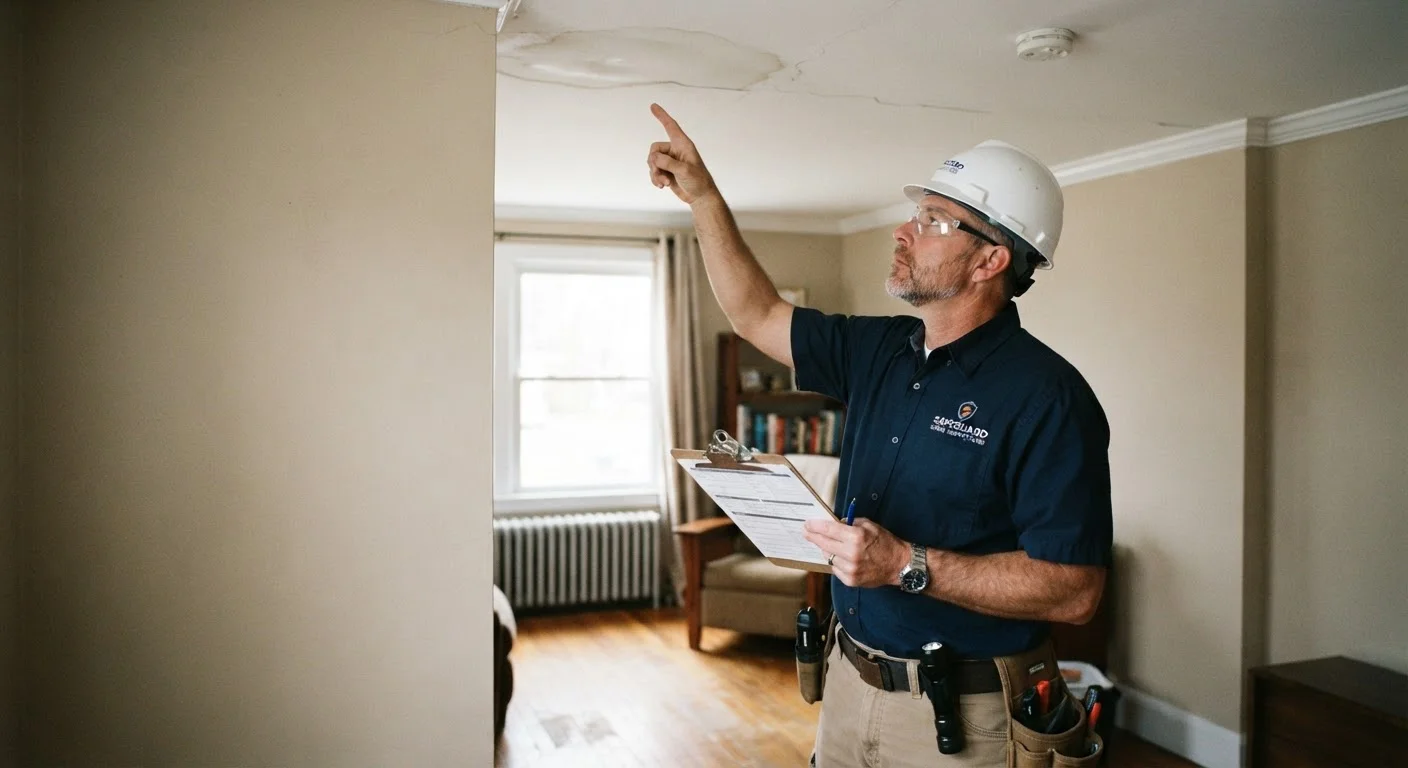
Signs of water intrusion — staining on ceilings, efflorescence (white mineral deposits) on basement walls, musty odors, soft subfloor material, or active mold — should be taken seriously. Moisture is both a structural threat and a health concern, and it almost always has a source that requires diagnosis.
What to do: Identify the source before estimating the fix. A roof leak, a grading problem that directs runoff toward the foundation, a failed sump pump, or plumbing condensation each have different solutions and costs. In cases where mold is visible or suspected, a separate mold assessment by a certified industrial hygienist may be warranted. Do not accept a seller's cosmetic remediation — fresh paint over staining, for example — as evidence the underlying issue is resolved.
Cosmetic fixes over water stains are a warning sign, not a resolution — always trace moisture to its source.
Electrical System Deficiencies
Outdated wiring types (such as aluminum branch circuit wiring or knob-and-tube found in older homes), double-tapped breakers, missing ground fault circuit interrupter (GFCI) protection near water sources, and panels flagged for fire risk are all issues that carry real safety consequences.
What to do: Request a licensed electrician's full evaluation rather than a piecemeal fix list. Some older panels — certain Federal Pacific and Zinsco models have been widely cited in the industry — may be difficult or expensive to insure, which can also create complications with your lender. Electrical upgrades are rarely inexpensive, but they are also non-negotiable from a safety standpoint. Use the electrician's quote as your negotiating anchor.
Electrical deficiencies are non-negotiable safety issues — get a licensed electrician's full assessment before negotiating.
HVAC System Age and Function
Inspectors will test heating and cooling systems for basic function and note the approximate age. A furnace or air handler beyond 15–20 years, or one showing signs of heat exchanger cracks, carbon monoxide risk, or refrigerant leaks, is a significant finding both for comfort and safety.
What to do: A cracked heat exchanger — which can allow combustion gases to enter living spaces — is a serious health hazard, not a deferred maintenance item. Get an HVAC technician's independent assessment. For systems that are simply aging but still functional, negotiate a seller credit or factor replacement costs into your offer revision. New central HVAC systems typically run $5,000–$12,000 installed, depending on system type and home size.
A cracked heat exchanger is a health hazard — treat it as a safety issue, not a routine repair.
Plumbing Issues: Age, Material, and Drainage
Cast iron drain lines past their serviceable life, galvanized supply pipes with corrosion, polybutylene piping (a material associated with elevated failure rates, widely installed from the late 1970s through mid-1990s), low water pressure, and slow drains all surface in inspections with varying levels of urgency.
What to do: A sewer scope — a separate camera inspection of the sewer lateral from the house to the street — is worth ordering independently for any home older than 25–30 years. It is not standard in most home inspections and can reveal root intrusion, collapsed sections, or deteriorated pipe that would otherwise be invisible. Plumbing remediation costs vary enormously based on scope; get specific quotes before negotiating.
Order a separate sewer scope on older homes — most standard inspections do not include the lateral line.
Hazardous Materials: Asbestos, Lead, and Radon
Homes built before 1978 may contain lead-based paint; homes built before the mid-1980s may have asbestos in insulation, floor tiles, or pipe wrap. Radon — a naturally occurring radioactive gas — can be elevated in any home regardless of age and is the second leading cause of lung cancer in the U.S. according to the Environmental Protection Agency.
What to do: Radon testing is inexpensive and can be requested as part of the inspection or performed separately. If levels exceed the EPA's action guideline of 4 picocuries per liter (pCi/L), mitigation systems are generally effective and cost $800–$2,500 installed. For suspected asbestos or lead, do not disturb materials — hire a certified professional for testing and, if needed, abatement. These are disclosable conditions in most states, and sellers may be required to address them or provide credits.
Radon mitigation is effective and relatively affordable — test for it in every home, regardless of age or region.
Using Findings Strategically — Whether You're Buying or Selling
Buyers should resist the urge to either panic or dismiss findings wholesale. Instead, get repair estimates from licensed contractors before submitting any requests — arriving at the negotiation table with documented costs is far more persuasive than a vague ask for "allowance." Focus your requests on safety and structural concerns; sellers are far more likely to negotiate on a cracked heat exchanger than on cosmetic paint chips.
Bring a Contractor to the Re-Walk
After receiving the inspection report, many buyers have the option to walk through the property again before closing. Bringing a licensed contractor to assess a specific concern — a roof, an electrical panel, a moisture issue — gives you professional cost estimates that make your repair requests or credits far more defensible. This step is especially valuable when the inspection flags something the general inspector couldn't fully evaluate.
Sellers aren't powerless here either. A pre-listing inspection — ordering your own report before putting the home on the market — can surface problems while you still have time and budget to fix them on your terms. This approach often prevents the more damaging scenario of findings derailing a deal after an offer is accepted. For a broader look at preparing a home for market, see our seller's preparation checklist. And if you want to understand how major defects might affect your home's assessed value, our article on what shapes a home's appraisal value provides useful context.
This article is for general informational purposes only and does not constitute legal, financial, or professional real estate advice. Consult a licensed real estate professional, inspector, or attorney for guidance specific to your situation.