How Online-Only Banks Are Structured
Traditional banks generate significant overhead from maintaining physical branches — rent, staff, utilities, and security. Online-only banks eliminate those costs by operating entirely through digital infrastructure. This structural difference is the root of nearly every distinctive feature these institutions offer.
There are two common models. The first is a fully chartered digital bank that holds its own banking license and FDIC membership. The second — common among newer neobanks — is a financial technology company that partners with an FDIC-insured bank to hold customer deposits. In both cases, your money sits in an insured institution; the difference is mostly behind the scenes.
If you're considering opening an account for the first time, our guide to opening your first bank account covers what to expect from the application process regardless of bank type.
Verify FDIC Coverage Before You Deposit
Not every company marketing itself as a bank is a direct FDIC member. If an online bank uses a partner bank model, your deposits are held at the partner institution, not the app itself. You can confirm FDIC membership for any institution using the BankFind Suite tool at fdic.gov. Always check before depositing significant funds.
Deposits, Withdrawals, and ATM Access
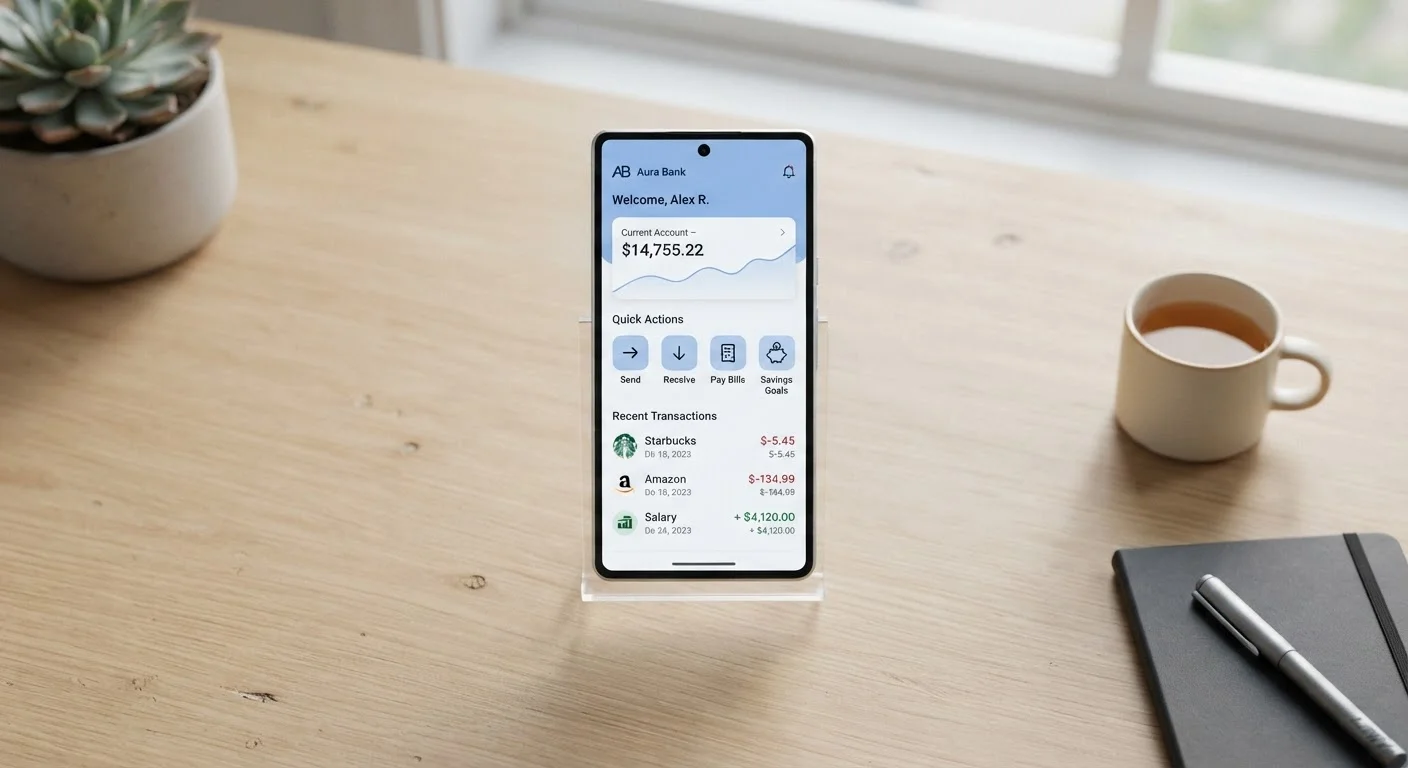
Without a teller window, online banks have built alternative deposit channels. Mobile check deposit — photographing a check with a smartphone — handles most paper check needs. Direct deposit from an employer routes funds electronically with no physical step required. ACH transfers move money between external accounts, typically settling within one to three business days.
Cash is where digital banking shows its clearest constraint. Some online banks have partnered with retail networks so customers can deposit cash at convenience stores or pharmacies, though fees may apply. Others simply don't support cash deposits, making them less practical for people whose income includes significant cash payments.
ATM access is addressed through network partnerships. Many online banks participate in large surcharge-free networks — such as Allpoint or MoneyPass — giving customers access to tens of thousands of ATMs nationwide. Some institutions also reimburse a set number of out-of-network ATM fees per month.
$250,000
FDIC deposit insurance limit per depositor
The FDIC insures deposits up to this amount per depositor, per ownership category, at member institutions — including qualifying online banks.
55,000+
ATMs in the Allpoint surcharge-free network
Allpoint, one of the largest ATM networks used by online banks, provides surcharge-free access at locations in retail stores across the US.
~5%
Online bank high-yield savings APY (peak 2023–2024 cycle)
During the high-rate environment of 2023–2024, some online bank savings accounts offered APYs near 5%, well above the national average for traditional savings accounts per FDIC data.
Fee Structures and Interest Rates
The reduced overhead of a branchless model often translates into consumer-facing benefits. Online banks frequently charge fewer monthly maintenance fees and tend to carry lower minimum balance requirements than comparable brick-and-mortar accounts. Some offer no minimum balance at all.
Annual percentage yields (APYs) on savings accounts at online banks have historically trended higher than the national average for traditional bank savings accounts, a pattern the FDIC's published national rate data has reflected over time. However, rates vary by institution and change with broader interest rate conditions — no particular return is guaranteed.
It's worth examining fee schedules carefully regardless of bank type. Overdraft policies, wire transfer fees, and foreign transaction fees differ across institutions. Our article on how overdraft fees work and how to avoid them is useful context when evaluating any bank account.
Compare Fee Schedules Side by Side
Before committing to an online bank, download or screenshot the full fee schedule from the account disclosures page — not just the marketing summary. Look specifically for overdraft policies, wire transfer fees, and any conditions that could trigger a monthly maintenance charge. What appears fee-free on the surface sometimes carries costs in specific situations.
Customer Service Without a Branch
Replacing in-person service is one of the more nuanced challenges online banks face. Most offer phone support, live chat, and email — but hours, wait times, and quality vary considerably. Some digital banks have invested in 24/7 chat support; others operate during standard business hours only.
For straightforward transactions and inquiries, digital self-service tools handle most needs efficiently. Complex situations — disputing a charge, recovering account access after a security event, or resolving an unusual transaction — can be more friction-filled without the option of walking into a branch.
Online banking isn't the only alternative to traditional bank branches. Credit unions offer another model with their own trade-offs in fees, services, and member structure worth comparing before deciding.
Is an Online Bank Right for You?
Online-only banking works best for people who are comfortable managing money through apps, rarely handle physical cash, and want straightforward deposit and payment services without monthly fees eating into their balance. It's a poor fit for anyone who regularly deposits large amounts of cash or needs frequent in-person financial guidance.
Switching from a traditional bank to a digital one requires careful planning. Updating direct deposits, recurring bill payments, and linked external accounts are steps that need to happen in the right order to avoid disruption. Our bank-switching checklist walks through that transition step by step.
This article is for general informational purposes only and does not constitute personalized financial or banking advice. Consult a qualified financial professional for guidance specific to your situation. Deposit insurance details depend on individual account structure — verify coverage with your specific institution and the FDIC.