
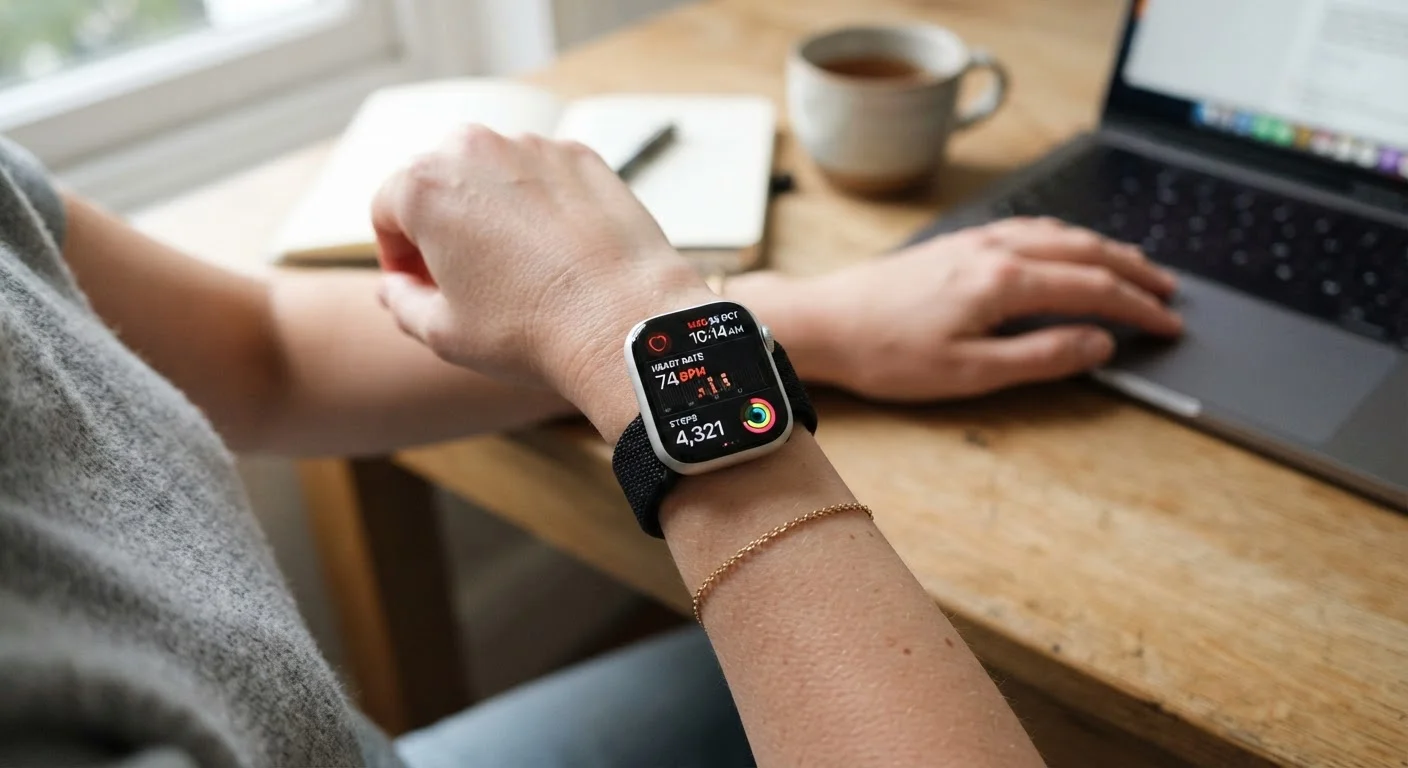
Why Fitness Metrics Are Worth Understanding
Fitness trackers have become remarkably capable, surfacing data once available only in clinical settings. But more data doesn't automatically mean better decisions. The value of any metric depends on how accurately it's measured, how consistently you track it, and whether it connects to a goal that's meaningful to you.
This reference covers the metrics most commonly found on consumer devices - what they measure, what they can genuinely tell you, and where their limits lie. Whether you're building a routine from scratch or refining an existing one, understanding the numbers behind the data puts you in a stronger position to use them wisely.
This article provides general health information only and is not a substitute for advice from a qualified healthcare professional. If you have any medical conditions or concerns, consult your doctor before making changes to your activity level.
| Average resting heart rate (adults) | 60-100 beats per minute (American Heart Association) |
| VO2 max measurement method (consumer devices) | Estimated from heart rate and pace data |
| Steps associated with reduced mortality risk | Roughly 7,000-8,000+ per day (JAMA Internal Medicine, 2021) |
| Weekly moderate activity guideline | 150 minutes (adults) (U.S. Department of Health and Human Services) |
| Calorie burn estimate accuracy (wearables) | Can vary by 20-30% or more (Stanford Medicine research, published findings vary by device) |
| Sleep tracking method (consumer devices) | Accelerometry and optical heart rate sensing |
The Metrics That Tend to Matter Most
Not all data points are created equal. Some metrics are well-validated by research and genuinely actionable. Others are interesting but require context to interpret accurately.
Resting Heart Rate (RHR)
The number of times your heart beats per minute while at complete rest. It's typically measured first thing in the morning. A lower RHR generally indicates stronger cardiovascular fitness.
Heart Rate Variability (HRV)
The variation in time between consecutive heartbeats. Higher HRV is generally associated with good recovery and autonomic nervous system health, while lower HRV can indicate fatigue or physiological stress.
VO2 Max
The maximum volume of oxygen your body can consume during intense exercise, expressed in milliliters per kilogram of body weight per minute. It is one of the most widely used indicators of aerobic fitness.
Heart Rate Zones
Defined intensity ranges - usually five - based on percentages of your estimated maximum heart rate. Each zone corresponds to a different physiological effect, from active recovery to peak anaerobic effort.
Active Minutes
Time spent in moderate-to-vigorous physical activity as measured by a wearable device. It's a metric aligned with public health guidelines that emphasize consistent movement throughout the week.
SpO2
Peripheral capillary oxygen saturation - an estimate of the percentage of hemoglobin in the blood carrying oxygen. Consumer wearables use optical sensors to estimate this value.
Resting Heart Rate
Resting heart rate (RHR) is one of the most reliable everyday indicators of cardiovascular health. A lower RHR generally reflects a more efficient heart. Tracking trends over weeks - rather than reacting to any single reading - is where the value lies. A gradual decline as you become more active is a meaningful signal. A sudden unexpected spike can indicate illness, stress, or inadequate recovery.
Heart Rate Zones
Zone-based training divides exercise intensity into ranges - typically five zones based on percentages of maximum heart rate. Training intentionally across different zones helps balance endurance, fat metabolism, and peak performance development. Wrist-based optical sensors are less accurate during high-intensity effort, so zone data is most reliable during steady-state activity like running or cycling. This is especially relevant if you're exploring high-intensity interval training, where intensity shifts rapidly.
Steps and Active Minutes
Daily step counts remain a practical proxy for general movement volume. Research has consistently linked higher daily step counts with reduced risk of cardiovascular disease and all-cause mortality, though the relationship isn't strictly linear and the "10,000 steps" figure is a round-number benchmark rather than a precise clinical threshold. Active minutes - time spent in moderate-to-vigorous activity - can be a more meaningful metric for structured exercise goals. See our guide to walking as exercise for a deeper look at what step volume actually achieves.
Sleep Tracking
Consumer-grade sleep tracking can identify broad patterns - total sleep time, sleep consistency, and rough estimates of light, deep, and REM sleep. The stage estimates are less clinically precise than polysomnography, but trends over time offer useful signals. Consistently short sleep or fragmented nights are worth discussing with a healthcare provider.
VO2 Max Estimates
VO2 max - the maximum rate at which your body can use oxygen during exercise - is one of the strongest predictors of long-term cardiovascular health. Most tracker estimates are derived from heart rate and pace data rather than direct measurement, introducing some margin of error. Still, the relative number and its direction over time are genuinely informative about aerobic fitness. Improvements correlate with meaningful health outcomes, making it one of the more substantive metrics on modern devices.
A Note on Device Accuracy
Consumer fitness trackers are wellness tools, not medical devices. Accuracy varies between brands, models, and even across different skin tones and body positions. Optical heart rate sensors perform better during steady-state exercise than during rapid intensity changes. Treat readings as useful trends rather than clinical-grade measurements, and flag any concerning patterns to a healthcare provider rather than self-diagnosing based on tracker data.
Metrics to Treat With More Caution
Some readings on fitness trackers are less reliable or harder to act on without professional context.
- Blood oxygen (SpO2): Consumer sensors can estimate blood oxygen saturation, but accuracy varies significantly across devices and skin tones. These readings are not a substitute for clinical pulse oximetry.
- Stress scores: These are typically derived from heart rate variability (HRV) - a legitimate physiological measure - but the composite "stress" scores manufacturers build from HRV are proprietary and not standardized. HRV itself is worth understanding; branded stress scores less so.
- Calorie burn: Energy expenditure estimates from wearables carry meaningful error margins, particularly during resistance training and non-steady-state activity. Use these figures directionally, not as precise targets.
Tracking behavior of any kind - including fitness data - carries its own trade-offs worth considering. For a balanced perspective on how data logging affects wellbeing, the honest trade-offs of self-tracking is a useful read.
Fitness metrics are most valuable when they inform movement decisions grounded in evidence - not when they replace the bigger picture of consistent, enjoyable physical activity. For context on what exercise science actually supports, see our article on fitness myths and the evidence.