
What Insurance Actually Does
At its most basic, insurance is a financial arrangement: you pay a regular fee (the premium), and in return, the insurance company agrees to cover certain financial losses you might face. You're not eliminating risk - you're transferring it to a larger pool so that a catastrophic expense doesn't fall entirely on you.
Think of it as a contract. The insurer promises to pay for specific losses under specific conditions. Your job as a policyholder is to understand which losses are covered, under what conditions, and what you'll owe before that coverage kicks in.
Start with what you already have
Before shopping for new coverage, check whether you're already covered somewhere. Employer benefits, a parent's health plan (if you're under 26), or a landlord's policy may provide some coverage. Knowing what you have avoids paying for overlapping protection.
The Three Core Coverage Categories
Most Americans encounter three major coverage types at some point. Here's what each one addresses:
Health Insurance
Health insurance helps pay for medical care - doctor visits, hospital stays, prescription drugs, and preventive services. Plans typically involve a network of providers, and costs vary depending on whether you see in-network or out-of-network providers. Coverage details differ significantly between plans, so comparing the Summary of Benefits and Coverage document for any plan you're considering is essential.
Auto Insurance
Auto insurance is legally required in nearly every U.S. state. At minimum, most states require liability coverage, which pays for damage or injuries you cause to others. Optional coverages - like collision (damage to your own car from an accident) and comprehensive (damage from events like theft or weather) - add additional protection. For a deeper look at each coverage type, see our plain-language auto coverage reference.
Home Insurance
Homeowners insurance covers your dwelling, personal belongings, and liability if someone is injured on your property. Renters insurance serves a similar purpose for people who don't own their home - it covers personal property and liability, though not the building itself. Note that standard policies typically exclude certain events like floods and earthquakes, which require separate coverage.
Premium
The regular payment - usually monthly - you make to keep an insurance policy active. Paying your premium is what keeps your coverage in force.
Deductible
The dollar amount you must pay out of pocket toward a covered loss before your insurance company starts paying its share.
Coverage limit
The maximum amount an insurer will pay for a covered claim. Costs above this ceiling are your responsibility.
Exclusion
A specific event, condition, or type of damage that a policy will not cover under any circumstances.
Declarations page
The summary page at the front of a policy that lists who is covered, what is covered, the policy limits, and the premium amount.
Liability coverage
Coverage that pays for harm or damage you accidentally cause to other people or their property.
Key Terms You'll Encounter Right Away
Insurance has its own vocabulary, and a few terms appear in almost every policy document. Understanding them before you start shopping makes everything else clearer.
- Premium: The amount you pay - usually monthly - to keep coverage active.
- Deductible: The amount you pay out of pocket before your insurer pays its share of a claim.
- Coverage limit: The maximum your insurer will pay for a covered loss.
- Exclusion: Something the policy specifically does not cover.
- Copay / Coinsurance: Cost-sharing arrangements in health insurance where you pay a fixed amount or a percentage of each service.
For a more complete reference, our insurance glossary defines 40 terms every policyholder should know. You can also browse the coverage type glossary for definitions specific to coverage categories.
Coverage requirements vary by state
Insurance regulation in the U.S. is handled at the state level, which means minimum coverage requirements, available policy types, and consumer protections differ depending on where you live. What's required in one state may be optional - or unavailable - in another. Check your state's insurance department website for requirements specific to your location.
How to Start Reading a Policy
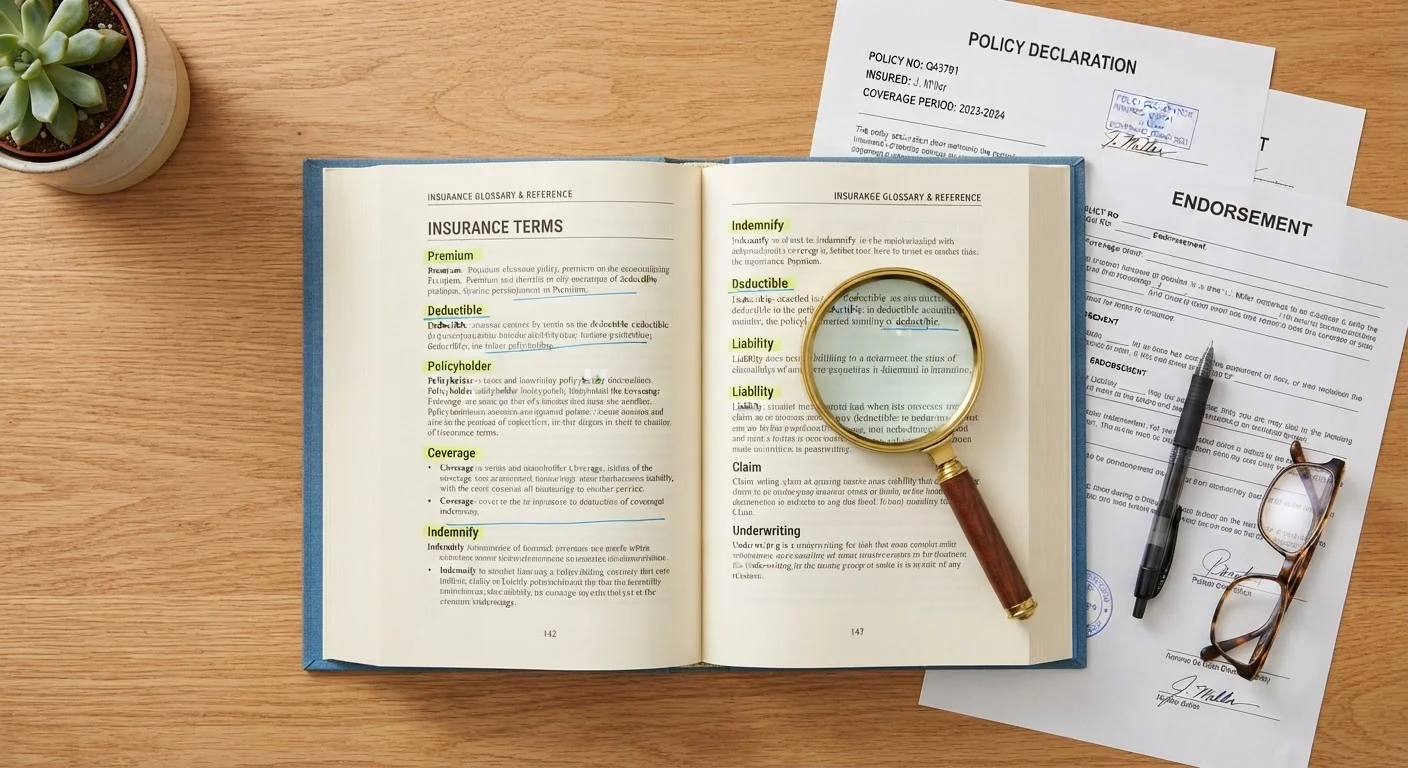
Policy documents can feel overwhelming, but they follow a predictable structure. Most include a declarations page (a summary of what's covered, the coverage limits, and the premium), followed by the policy language itself, endorsements (add-ons or changes), and an exclusions section.
Start with the declarations page to confirm the basics - who is covered, for what, and up to how much. Then read the exclusions carefully. Understanding what isn't covered is often more useful than a general sense of what is. If you have specific questions about your policy language, a licensed agent or broker is the right person to ask.
Policy summaries aren't the full story
Marketing materials and online summaries highlight what a policy covers - they rarely emphasize exclusions, limits, or conditions. Always request and read the full policy document before assuming a specific loss will be covered. If anything is unclear, ask a licensed agent to explain it in writing.
What Comes Next
Getting oriented is the first step. From here, you can go deeper into whichever area is most relevant to your situation. Our Claims & Costs hub walks through what happens when you file a claim and what to expect for out-of-pocket expenses. The Policy Terms hub helps you read your policy with more confidence.
If you're new to managing your finances more broadly - including building a credit history - our guide to building credit from scratch is a useful companion read.
This article provides general insurance information and education only. It is not personalized insurance, financial, or legal advice. Coverage terms, exclusions, and requirements vary by provider, plan, and state. Always read your actual policy documents and consult a licensed insurance agent or adviser for guidance specific to your situation.